
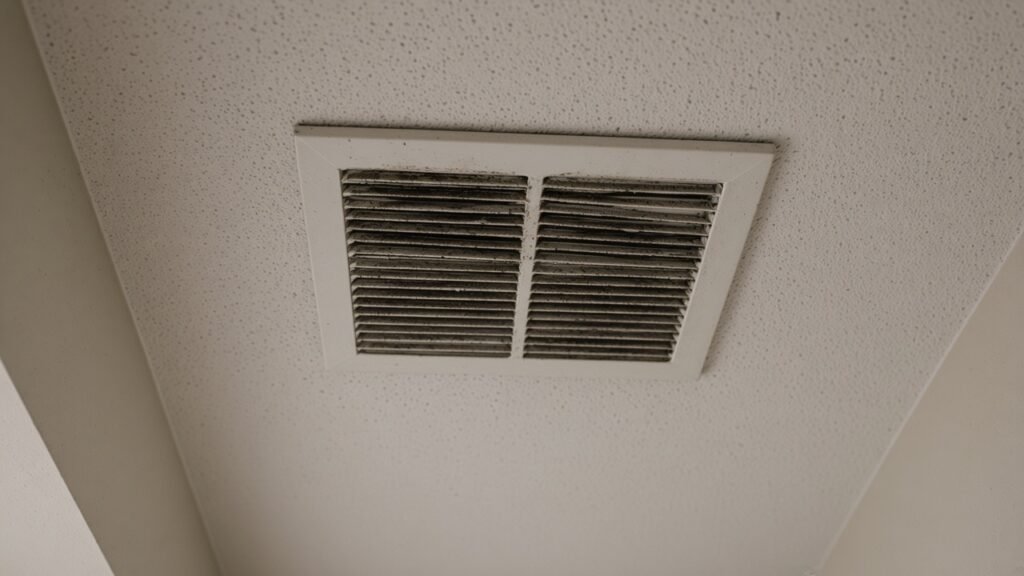
People ask: do I need an air mold test or a surface swab? Short answer: use a surface swab if you can see a stain you want identified. An air sample is a snapshot of spores floating in that room at that moment. Total Testing is a mail-in surface swab with inspector-reviewed lab analysis. Neither method diagnoses illness, scores how “toxic” the house is, or proves the home is safe.
Do not wipe, scrape, or bleach the stain so you can “compare air before and after.” Disturbing growth can release spores. The EPA notes there are no federal limits for mold, so no air number and no swab result can show that a house meets a government mold standard. The CDC does not recommend routine home testing to predict who will get sick.
By the Total Testing Editorial Team
Quick takeaways
- Surface swab: names the stain you can reach. That is what Total Testing does.
- Air cassette: a professional pump pulls a known volume of air. It is a moment in time, not a map of the house.
- Petri dish / settle plate: an open dish that grows ordinary indoor spores. It is not a reliable yes-or-no for a specific patch. See are petri dish mold tests accurate?.
- Visible growth is a reason to document that surface when you need a lab ID or a record — not a reason to skip the lab, and not a reason to clean it yourself.
- A species ID is not a health risk score. Effects vary by person.
Three tests people mix up
Hardware-store aisles and search results mash three different tools into one phrase: “air quality mold test kit.” They are not the same question.
A surface swab (or tape lift) collects material from a stain, a grille, grout, or a cabinet floor. The laboratory looks at what was on that surface. If your question is “is this black line mold, dirt, or mildew,” this is the tool that can answer it. See mold or dirt around vents and mold vs. mildew.
A professional air cassette uses a calibrated pump. It reports spores that were in the air during the few minutes the pump ran. Inspectors often compare indoor air to outdoor air the same day. Even then, a short sample can miss a problem that is behind a wall, and a “low” count does not mean the house is safe. NIOSH has said that visual inspection and musty odors are often more reliable than short-term air sampling for finding a dampness problem.
A settle plate is the open petri dish. You leave it on a counter. Spores fall on the agar. Almost every indoor room can grow something, because spores are already in air. That growth is not proof of a hidden infestation and not an identification of the bathroom stain you actually care about.
Total Testing sells the first method: mail-in surface swabs, accredited laboratory analysis, inspector-reviewed reports. We do not sell air cassettes or settle plates. If your question is room air as a number, that is a different product from a different lab. If your question is the stain, stay with the swab.
Where mold actually lives in a house (and why air often misses it)
Mold needs moisture and a surface. In homes that means bathrooms, HVAC grilles, under-sink cabinets, windowsills, laundry walls, and the edges of materials that stayed wet after a leak. EPA’s practical window is still 24 to 48 hours: wet materials that do not dry in that time often support growth.
A colony on grout or on a register face may shed some spores into the room. It may also sit there while the air sample, taken on a still afternoon with the windows closed, looks ordinary. The reverse is also true. Outdoor air on a windy day can raise indoor spore counts without any indoor colony on a surface you can see.
That is why “the air test was fine” and “the vent still looks like dirt” can both be true in the same house. The air snapshot and the stain are different questions. If you can see the stain, documenting the stain is the direct measurement. If you cannot see anything and the house smells musty, look for damp reachable edges first. An air kit will not show you the cabinet floor you skipped. See musty smell with no visible mold.
Do not take HVAC equipment apart to chase an air number. Swab the grille you can reach. That result is the grille, not the coil and not the whole duct run.
Health effects: neither test is a medical instrument
People buy air kits because they want a number that means “we can breathe here.” There is no federal number that does that. The EPA states that no EPA or other federal limits have been set for mold or mold spores. An indoor count, even from a good pump, cannot show compliance with a standard that does not exist.
The CDC says health effects vary by person. Damp buildings are associated with irritation and allergy-type symptoms in some occupants, not in others. The CDC does not recommend routine home mold testing to predict who will get sick. A species list from a swab is not a toxicity rating of the air. An air spore count is not a diagnosis.
If someone in the home is ill, that is a clinician’s question. The honest lab job is narrower: name what was on the sampled surface, or — for an air sample you buy elsewhere — describe spores in the air during that run. Neither result makes the home “safe.”
Prevention: moisture control, not a second test and not DIY cleanup
Switching from an air kit to a swab does not change the cleanup rule. Total Testing does not instruct readers to wipe, scrape, bleach, soap, or otherwise DIY-clean visible growth. Disturbing a colony can release more spores into the same air you were hoping to measure.
Prevention is the water:
- Stop leaks if you can do it without touching the growth.
- Dry standing water within 24 to 48 hours when that can be done without disturbing the colony.
- Run exhaust fans in baths and kitchens. Keep indoor humidity in a typical occupied range; EPA often cites about 30% to 50% relative humidity so surfaces do not stay wet.
- Do not paint over a stain so an air test “looks better.” Paint hides the surface you should have swabbed.
After a report, share it with a qualified mold remediation professional. If the area is large or may be hidden, also use a licensed assessor. They design an inspection. A mail-in swab does not. An air cassette in a box does not either, unless a qualified person planned where and when to run it.
Why the surface test is the one that matches Total Testing
The swab earns its keep when you need three things an air snapshot does not provide.
Species ID of the stain you can see. Color is a weak guide. Dirt, mildew, and mold share a lot of phone-photo real estate. The laboratory names what was on that surface so a remediator, landlord, or buyer is looking at a finding, not a guess. Visible growth is a reason to document that surface when you need that ID or that record. See do I need to test if I can already see it.
A written record. Chain of custody plus an inspector-reviewed lab report is something you can share. It is not a court order, not a medical file, and not a federal pass. It is still more useful than a fuzzy dish and a date scrawled on the lid.
Limits next to those uses: the sample is the surface you touched. It is not a wall cavity. It is not an on-site walkthrough. Full House (6 samples) is how you check several rooms that each have a stain — not an air survey, and not a claim that six swabs equal a whole-house inspection.
If you already know you need a planned indoor-air investigation, that is a professional sampling design, not a kit from a search ad. If you already know the question is the bathroom grout, skip the air aisle.
More on kit limits: are home mold test kits accurate?.
Which package if you are documenting surfaces, not air
Match swab count to the stains you can reach. One bathroom plus a vent is Spot Check. Several rooms is Extended or Full House. Label every bag.
- Spot Check — $189 — 2 swabs — 48 business hours after lab receipt
- Extended — $215 — 4 swabs — 48 business hours after lab receipt
- Full House — $270 — 6 swabs — priority 24 business hours after lab receipt
Every package includes accredited laboratory analysis, a package-specific PDF chain of custody, prepaid FedEx shipping, and a report on total-testing-diy.com. Every analysis is reviewed by a licensed mold inspector.
Official product screening disclaimer
Total Testing DIY surface swab kits are a preliminary screening tool for accessible surfaces. They are not a comprehensive mold assessment, building inspection, indoor air quality study, medical test, air sampling survey, or mold removal service.
Do not disturb visible growth. For removal, use a qualified mold remediation professional under your state and local rules. If moisture may be hidden or the area is large, also use a licensed mold assessor.
Frequently asked questions
Do I need an air mold test or a surface swab?
Use a surface swab if you can see a stain you want identified. An air sample is a snapshot of spores in the air at that moment. Total Testing is a mail-in surface swab with inspector-reviewed lab analysis. Neither method diagnoses illness or proves a home is safe.
Is a petri dish the same as an air cassette test?
No. A settle plate is an open dish that catches whatever falls on it, then grows on agar. A professional air cassette pulls a known volume of air across a slide. Both are air-side methods. Neither names a specific stain the way a surface swab does.
Can an air test tell me if my house is safe?
No. There are no EPA or federal limits for mold in indoor air, so an air number cannot show that a house meets a government mold standard. The CDC does not recommend routine home testing to predict who will get sick.
If I can see mold, should I still do an air test first?
Usually no. Visible growth is a reason to document that surface with a swab when you need a lab ID or a written record. An air sample of the same room does not tell you what is on the stain. Do not wipe the growth yourself.
What if I have a musty smell and no stain?
Look for damp edges you can reach: cabinet floors, baseboards, vent grilles. Swab those. An air kit still will not show you the hidden source. If you cannot find a reachable surface, use a qualified inspector or assessor rather than guessing from room air.
Does Total Testing sell an air quality mold test kit?
No. Total Testing packages are surface swabs mailed to an accredited laboratory: Spot Check (2 swabs, $189), Extended (4 swabs, $215), and Full House (6 swabs, $270). Full House is how you check several rooms, not an air survey of the whole house.
Why do air tests often find mold even in a clean-looking room?
Spores are already in indoor and outdoor air. A short air sample, or a dish left open on a counter, often grows something. That background is why a fuzzy dish is a poor yes-or-no for “do I have a problem.”
Can I swab an HVAC vent instead of testing the air?
Yes, if the question is the grille you can see. Swab the register face you can reach. That result is the grille, not the entire duct system and not the coil. Do not scrape the growth. Do not take apart equipment you are not qualified to open.
Will a species ID from a swab tell me how toxic the air is?
No. A species name on a surface is not a toxicity score for the room and not a medical diagnosis. Effects vary by person. The CDC does not recommend using home samples to predict illness.
How do I get a surface-swab report?
Mail the labeled samples with your chain of custody using the prepaid FedEx label. After lab receipt, Spot Check and Extended post within 48 business hours. Full House uses priority 24 business hour processing. Reports appear at total-testing-diy.com. Every analysis is reviewed by a licensed mold inspector.
Match the tool to the question
If the question is the stain, swab the stain. If the question is a planned air investigation, that is a different professional job. Do not use either result as a medical clearance. Keep moisture off the surfaces. Leave remaining growth to a qualified remediator.
Choose a surface-swab package on total-testing.com. Reports post at total-testing-diy.com.