
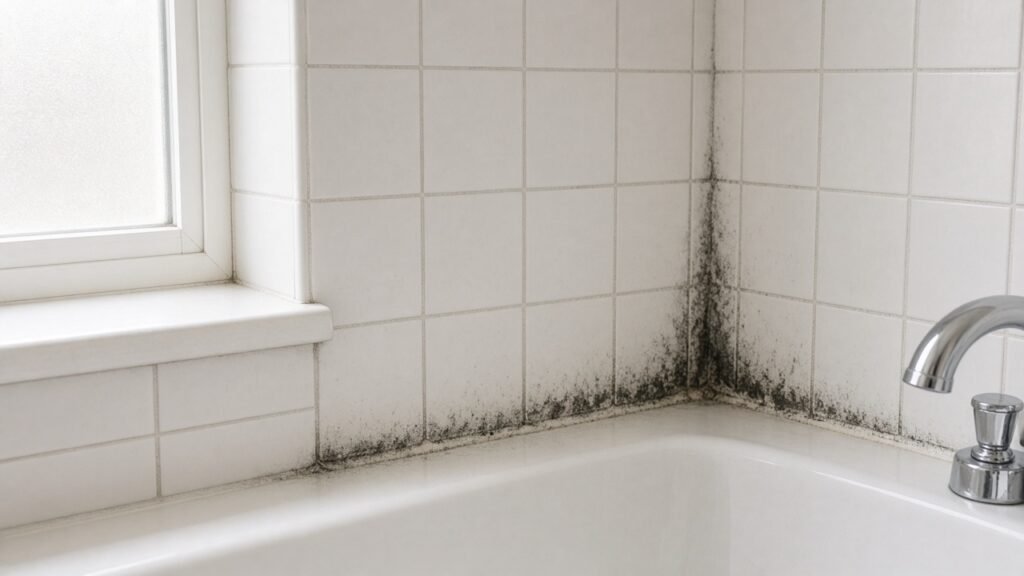
People ask: do I need to test for mold if I can already see it? Short answer: you already know something is growing. A lab swab is still worth it when you need proof of what that stain is — for a landlord, a lease, a buyer — or when you simply want to know what you are handing to a remediation professional.
Do not scrape, bleach, or wipe the growth yourself. Disturbing mold can release spores into the air. Total Testing identifies what is on the surface you swab. We do not perform cleanup, and we do not instruct homeowners to remove mold.
A surface swab cannot see inside walls or tell you whether anyone will get sick. The CDC does not recommend testing as a way to predict health risk. What the lab can do is name what was on that 2×2 inch patch, with a chain of custody you can share.
By the Total Testing Editorial Team
Quick takeaways
- Visible growth is a reason to document the surface, not a reason to skip the lab.
- A swab of an HVAC grille, windowsill, or cabinet stain can show whether that spot is mold, dirt, or mildew.
- The report is a laboratory record of that surface. It is not a licensed inspection and not a court order.
- Do not disturb the growth. Leave removal to a qualified mold remediation professional.
- Stop active water if you can do it without touching the mold (shut a valve, run a dehumidifier). Then sample, then call a pro.
Why test a stain you can already see
Guessing “that looks like mold” is not the same as a laboratory identification. People order a swab of visible growth when:
- A landlord or property manager wants more than a phone photo.
- They need to know whether a dark HVAC register is mold or ordinary dust. See mold or dirt around vents.
- They cannot tell mildew from mold and do not want to guess. See mold vs. mildew.
- They want species on the report before they hire remediation, so the contractor knows what was growing on that patch.
The EPA notes that sampling is not required before professional cleanup begins, and that there are no federal mold limits. That is not the same as “a test is useless.” If you need a written lab record of a specific accessible surface, swab that surface.
Do not clean it yourself
Wiping, sanding, or bleaching visible growth can send spores into room air. Total Testing is not a remediation company. We will not tell you to scrub a vent, a wall, or a cabinet.
After you have a report:
- Keep people and pets away from the area as much as practical.
- Do not paint over it.
- Share the digital report with a qualified mold remediation professional (and a licensed mold assessor if the area is large or may be hidden).
Stopping a leak or lowering humidity is moisture control. It is not the same as disturbing the colony.
What a Total Testing swab will and will not do
It identifies what was on the 2×2 inch patch you sampled. It does not map ducts, wall cavities, or the whole house, and it is not a medical test. Details: are home mold test kits accurate?
Packages for a visible stain, vent, or landlord record
- Spot Check ($189 / 2 samples): One or two patches — a vent plus a nearby stain, for example. 48 business hour lab turnaround after receipt.
- Extended ($215 / 4 samples): Several rooms or registers. 48 business hour lab turnaround after receipt.
- Full House ($270 / 6 samples): More coverage. Priority 24 business hour lab processing after receipt.
Every package includes accredited laboratory analysis, a package-specific PDF Chain of Custody form, prepaid FedEx shipping, and a report on total-testing-diy.com.
Official product screening disclaimer
Total Testing DIY surface swab kits are a preliminary screening tool for accessible surfaces. They are not a comprehensive mold assessment, building inspection, indoor air quality study, medical test, or mold removal service.
Do not disturb visible growth. For removal, use a qualified mold remediation professional under your state and local rules. If moisture may be hidden or the area is large, also use a licensed mold assessor.
Frequently asked questions
If I can see mold, do I still need a test kit?
You already know something is growing. A lab swab is still the right next step when you need a written record for a landlord, lease, or buyer, when the stain might be dirt, or when you want species identification before you hire remediation. Total Testing does not recommend wiping or scraping the growth yourself.
Can I clean visible mold myself?
Total Testing does not recommend DIY mold removal. Scrubbing, bleaching, or scraping growth can release spores into the air. Stop active leaks if you can do so without disturbing the growth, then share your lab report with a qualified mold remediation professional.
Will a lab report prove mold to my landlord?
A Total Testing report is a laboratory identification of the surface you swabbed, with a chain of custody form. It is a document you can share. It is not a licensed inspection, a legal finding, or a guarantee that a landlord must act. For HVAC vents, swab the grille you can reach; that result is the grille, not the whole duct system.
Does a species name tell me if the house is dangerous?
No. The CDC does not recommend routine home mold testing to predict who will get sick. There are no federal mold limits, so a report cannot certify that a home is safe. A species ID tells you what was on that patch so a remediation professional knows what they are dealing with.
See it, document it, do not disturb it
Visible growth is exactly when a labeled surface swab is useful: you know where to sample. Get the lab name for that patch, then let a remediation professional handle removal.
Packages: total-testing.com/packages.