
Walking into a room and catching a persistent, earthy, or musty odor can be deeply frustrating—especially when your walls, ceilings, and baseboards look completely clean.
A musty smell is almost always a sign of elevated moisture and active fungal growth occurring out of sight. Rather than tearing down drywall or paying for expensive emergency inspections, homeowners can take a calm, methodical approach to locate hidden moisture and collect targeted lab samples.
At Total Testing, our core mission centers on a simple principle: Test Before You Guess. Here is your practical guide to understanding hidden odors and getting clear, accredited laboratory facts.
By the Total Testing Editorial Team
Quick Executive Summary
A musty odor with no visible growth usually points to hidden moisture. Here is the practical takeaway:
Core Takeaways:
- Musty odors are caused by Microbial Volatile Organic Compounds (mVOCs) released as mold grows in hidden damp areas.
- Common hiding spots include sink cabinets, laundry walls, baseboard seams, carpet subfloors, and HVAC air vents.
- Avoid open-air store “petri dishes” that catch harmless ambient dust and trigger false alarms.
- Use targeted surface swab sampling on damp edges or vent registers paired with your package-specific PDF Chain of Custody (COC) form.
- Ship samples using prepaid FedEx express shipping for accredited lab microbiology analysis in 24 to 48 business hours after receipt.
- Maintain indoor relative humidity between 30% and 50% and fix water leaks within 24 to 48 hours per EPA and CDC guidelines.
Why Does Your House Smell Musty When Walls Look Clean?
When you smell a distinct damp or earthy odor, your nose is detecting Microbial Volatile Organic Compounds (mVOCs). These microscopic airborne gases are produced as mold spores digest organic materials like wood, drywall paper, carpet padding, or cardboard in the presence of moisture.
Because mold thrives in dark, undisturbed spaces, active colonies frequently develop behind building materials where normal room lighting cannot reach. You might not see a single spot on your living room wall, but moisture trapped behind a baseboard or under a cabinet can produce a strong, persistent odor throughout the room.
Where Mold Commonly Hides Behind the Scenes
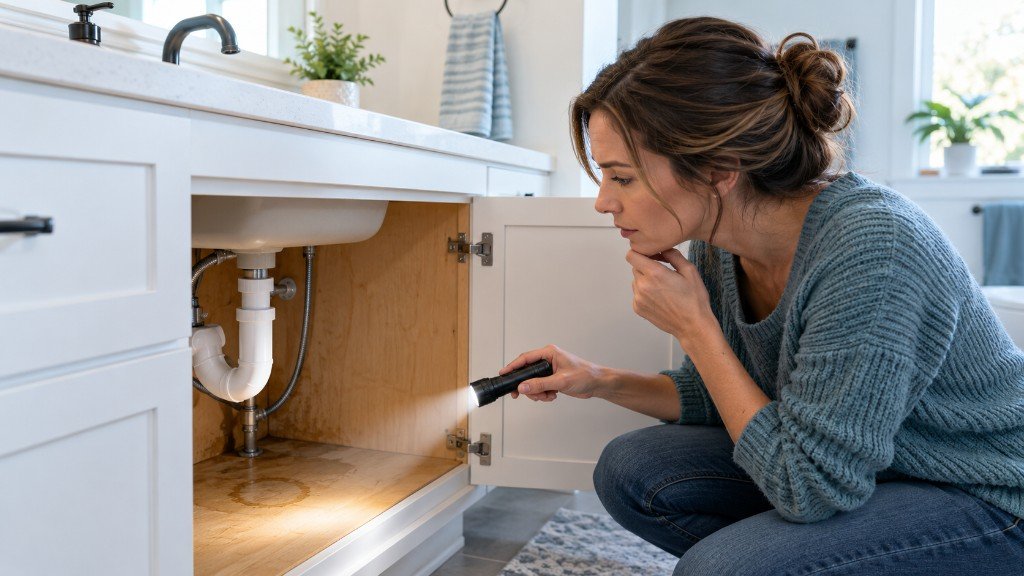
If your nose tells you something is damp but your eyes see clean surfaces, check these high-probability hidden moisture zones:
- Under Sink Cabinets & Appliance Kickplates: Minor slow drips from sink supply lines, dishwasher drain hoses, or refrigerator ice makers often pool under wooden cabinet bases without pooling onto the kitchen floor.
- Behind Laundry Washing Machines & Utility Walls: High humidity and slow hose leaks behind washers create ideal conditions for hidden growth along lower drywall edges.
- Carpet Subfloors & Basement Baseboard Seams: Moisture migrating up through concrete slabs or foundation walls gets trapped beneath carpet padding and wooden tack strips.
- HVAC Vent Registers & Air Ducts: Condensation forming inside cooling coils or damp ductwork can blow mVOC odors throughout your entire living space whenever the air conditioning runs.
- Behind Bathroom Vanity Mirrors & Tiled Shower Walls: Pinhole plumbing leaks or failing grout allow water to seep behind backing boards without creating visible surface stains right away.
The Problem with Open-Air “Petri Dish” Store Kits
When dealing with a mysterious musty smell, many homeowners buy over-the-counter culture dishes at a local hardware store. These kits require leaving a dish open in the room to collect airborne particles.
Why this approach leads to unnecessary worry: Mold spores are a natural component of outdoor and indoor air everywhere. An open-air dish collects harmless background spores that naturally float through open doors and windows. After a few days, mold grows on the agar dish regardless of whether your home has a real hidden mold issue.
The Smarter Approach: Instead of testing general room air with open culture plates, perform targeted surface swab sampling on suspected moisture paths, baseboard seams, or vent grilles. Swabbing specific damp or discolored edges gives certified microbiologists direct material to evaluate under microscopic examination.
Step-by-Step Action Plan: What to Do When You Smell Musty Odors
If your home smells musty, follow this calm, 5-step investigative blueprint to get definitive lab answers:
Step 1: Perform a Targeted Moisture Investigation
Follow your nose to the room with the strongest odor. Inspect low-lying areas, check behind appliances with a flashlight, and feel for dampness along baseboards or cabinet floors.
Step 2: Collect Targeted Surface Swabs
Select a suspicious 2×2 inch patch along a damp cabinet corner, baseboard gap, or HVAC vent register. Remove a sterile swab from your Total Testing kit, hold the stem, and gently roll the swab head across the 2×2 inch area with light, firm pressure. Place the swab into a clean, labeled collection tube or sealable bag.
Step 3: Complete Your PDF Chain of Custody (COC) Form
Every package purchased from Total Testing includes a package-specific PDF Chain of Custody (COC) form. Fill out your property information and record the exact sample location for each swab number (for example, “Under Kitchen Sink Cabinet Base” or “Master Bedroom Air Vent”). Place the completed PDF form inside your shipping box.
Step 4: Ship Via Prepaid FedEx Express
Place your labeled swab samples and signed PDF COC form into the shipping box. Attach your included prepaid FedEx express return shipping label and drop the box off at any official FedEx location or authorized drop box.
Step 5: Review Your Accredited Digital Lab Report
Once your samples arrive at the laboratory, certified microbiologists perform direct microscopic examinations. You will receive an email notification as soon as your digital lab report is published on your secure portal at total-testing-diy.com within 24 to 48 business hours after lab receipt.
Total Testing Package & Pricing Overview
Total Testing provides clear, flat-rate pricing with no hidden laboratory fees or counter shipping charges:
- Spot Check ($189): Includes 2 surface swab samples, package-specific PDF Chain of Custody form, prepaid FedEx express return shipping label, accredited laboratory microbiology analysis, and 48 business hour lab turnaround after receipt.
- Extended ($215): Includes 4 surface swab samples for multi-room coverage, package-specific PDF Chain of Custody form, prepaid FedEx express shipping label, accredited lab analysis, and 48 business hour lab turnaround after receipt.
- Full House ($270): Includes 6 surface swab samples for comprehensive home coverage, package-specific PDF Chain of Custody form, prepaid FedEx express shipping label, accredited lab analysis, and priority 24 business hour lab turnaround after receipt.
EPA & CDC Moisture Prevention Blueprint
Fixing hidden mold requires controlling the indoor water source that allowed it to grow in the first place.
According to guidance from the U.S. Environmental Protection Agency (EPA) and the Centers for Disease Control and Prevention (CDC):
- Maintain Indoor Relative Humidity Between 30% and 50%: Use air conditioning, dehumidifiers, and exhaust fans in kitchens, bathrooms, and basements to prevent condensation from forming on cool surfaces.
- Dry Leaks Within 24 to 48 Hours: Dry plumbing drips, roof leaks, or standing water immediately if you can do so without disturbing visible growth. Mold can take root within 24 to 48 hours on damp organic materials.
- Do Not Clean Visible Growth Yourself: Scrubbing, bleaching, or scraping mold can release spores into the air. Share your lab report with a qualified mold remediation professional. Total Testing does not instruct homeowners to remove mold.
Method Comparison: Testing Hidden Musty Odors
| Feature | Open-Air Culture Plates | Hardware Store Mail Kits | Total Testing DIY Surface Swabs |
|---|---|---|---|
| Sampling Method | Open agar dish exposed to room air | Variable collection tools | Targeted sterile surface swab (2×2 inch patch) |
| Lab Fees Included | No (requires extra mail-in fees) | Often extra $40 to $60 fee per sample | Yes, accredited laboratory microbiology included |
| Shipping Included | No prepaid shipping | Standard slow mail (no tracking) | Prepaid FedEx express return shipping label included |
| Formal Documentation | Manual paper slips | Varies widely | Package-specific PDF Chain of Custody (COC) form |
| Turnaround Time | 7 to 10 days waiting for growth | 1 to 2 weeks after mail arrival | 24 to 48 business hours after lab receipt |
| Reliability | Low (captures natural background spores) | Medium (depends on sample quality) | High (direct microscopic identification) |
Note: Total Testing packages include all laboratory analysis fees, prepaid express return shipping, and digital reporting with zero hidden costs.
Official Product Screening Disclaimer
Total Testing DIY mold test kits provide preliminary surface screening through accredited laboratory microbiology analysis. DIY surface swab sampling is designed to identify mold species on accessible surfaces and is not a substitute for a comprehensive professional engineering evaluation, structural wall cavity inspection, or full HVAC system assessment.
Frequently Asked Questions
Can I test air vents if my house smells musty?
Yes. Swabbing dust accumulation or damp metal seams along an HVAC vent grille is an effective way to collect a direct surface sample if you suspect moisture or growth inside your air distribution system.
How do I know which package to choose for a musty smell?
If the odor is localized to one cabinet or small area, the Spot Check package (2 samples) is ideal. If the odor is noticeable across multiple rooms or floor levels, the Extended (4 samples) or Full House (6 samples with priority 24-hour lab turnaround) package provides broader coverage.
What if my lab report comes back positive for mold?
If your report confirms mold growth on an accessible surface, stop active leaks if you can do so without disturbing the growth, keep indoor humidity in a typical range, and share the lab report with a qualified mold remediation professional. Do not scrape, bleach, or wipe the growth yourself.
Where do I access my lab report once complete?
Once the accredited laboratory completes analysis of your swabs, your digital lab report will be published directly to your secure account portal at total-testing-diy.com. You will receive an automated email notification the moment your report is available.
Clear Up Musty Odor Uncertainty Today
Don’t let a musty smell leave you guessing about your home’s air quality or paying for unneeded structural tear-outs. With Total Testing, you get transparent pricing, accredited laboratory microbiology, package-specific PDF Chain of Custody tracking, prepaid FedEx express return shipping, and fast digital reports in 24 to 48 business hours after lab receipt.
Remember: Test Before You Guess.
To select the right testing package for your home, visit total-testing.com today. If you already have your kit and are ready to access your account, log into your portal at total-testing-diy.com.