
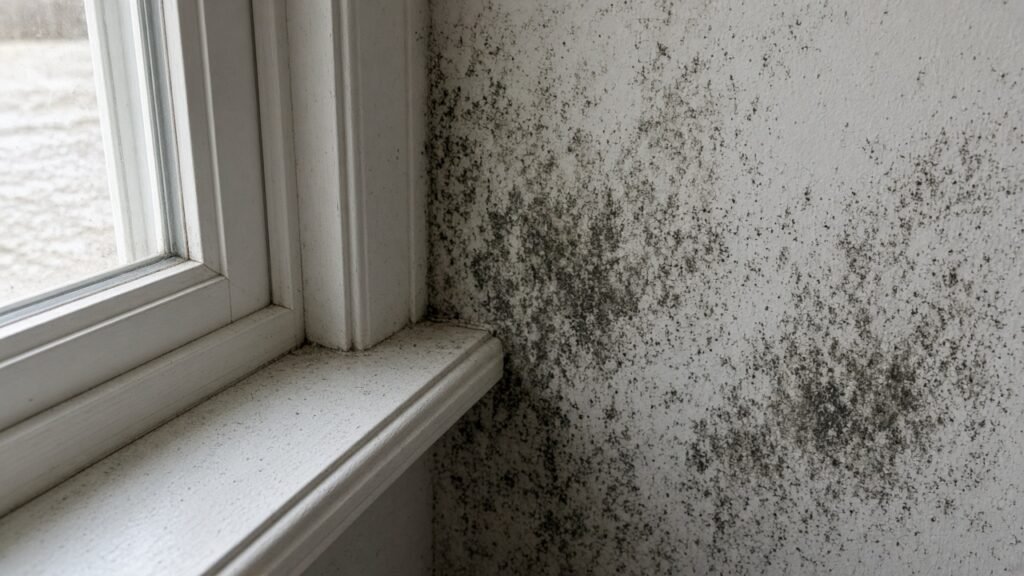
People ask: can I tell what kind of mold it is by the color? Short answer: no. The CDC says mold can look like spots of many different colors. NIOSH says color does not necessarily indicate that it is more or less dangerous. A lab swab of the stain you can see is how you identify it. Do not scrape or bleach it.
A species name is still not a medical diagnosis and not a score that the room is “safe.” It is a written ID of the patch you sampled, which is what you need before you hire remediation or document the stain for a landlord or a buyer.
By the Total Testing Editorial Team
Quick takeaways
- Color is not a species. Looking at a stain cannot confirm “black mold” as a specific fungus.
- NIOSH: color does not necessarily mean more or less dangerous. Treat indoor growth as a moisture problem, not a color ranking.
- The CDC lists Cladosporium, Penicillium, and Aspergillus as the most common indoor molds. That is a general fact, not a reading of your wall.
- Health effects vary by person. A test does not predict who will get sick.
- Do not wipe the patch. Swab it if you need a lab ID. Share the report with a qualified remediator.
Why the color on the wall is a bad ID
Mold is a fungus. It makes spores, and those spores ride indoor air until they land somewhere damp. The colony’s color comes from pigments, age, the material underneath, and dust sitting on top. Two different species can look the same. One species can look different on grout than it does on drywall.
That is why “it is black, so it is the dangerous kind” is not a lab result. NIOSH states there are many mold species that form in many different colors, and that color does not necessarily indicate that it is more or less dangerous. The CDC says if you see or smell mold, you do not need to know the type of mold to know indoor growth should be addressed. Those two sentences belong together: color is not an ID, and color is not a health ranking.
Dirt, mildew, and mineral stains steal the same palette. Black around a vent is often dust plus condensation. White on tile can be mildew or soap film. Brown on a ceiling can be a water stain. Green on grout can be mold or just old grout. See mold or dirt around vents, mold vs. mildew, and mold or a water stain.
What “black mold” actually means
Homeowners use “black mold” as a species name. It is not one. Many indoor molds look dark. Stachybotrys chartarum is often described as greenish-black and can grow on wet cellulose materials such as paper-faced drywall when moisture stays around. Looking at a dark patch cannot confirm that species.
NIOSH is direct about scare language. Certain molds can produce mycotoxins. The molds themselves are not toxic or poisonous. Molds that can produce mycotoxins, including Stachybotrys chartarum, should be considered the same as other molds that can grow in a house: they signal a water problem and should be addressed. Do not treat a dark stain as a special medical emergency based on color alone, and do not ignore a white or green stain because it “looks milder.”
If the question you typed was how to sample a dark stain you can reach, use how to test for black mold at home. This page is the other half of that search: the color is not the answer.
Where colored growth shows up at home
Mold needs moisture and a surface it can use as food. In a house that usually means bathrooms, HVAC grilles, under-sink cabinets, windowsills, laundry walls, and basement or crawl surfaces. The EPA notes that a little condensation on a windowsill or in a bath can be enough. Common indoor sites include bathroom tile and grout, basement walls, and areas around windows.
Bathrooms collect black and pink-looking films on grout and caulk because the fan is weak or the shower stays wet. Supply registers run cold in summer; warm room air hits the metal, leaves water, and dust turns dark. Windowsills show irregular specks where condensation sits overnight. Cabinet floors under a slow trap drip stain first, then can grow. Basement concrete can show white powder that is salt, not mold, or fuzzy growth on stored cardboard and paper-faced drywall.
The EPA says if wet materials are dried within 24 to 48 hours after a leak, in most cases mold will not grow. Humidity should stay below 60 percent, ideally 30 to 50 percent. Those are moisture rules. They do not turn a green patch into a species name. For bathrooms specifically, see where to swab in a bathroom.
Health effects: a color is not a risk score
The reason people stare at color is fear. They want black to mean “get out” and white to mean “it is fine.” That is not how the health agencies describe mold.
The CDC says exposure to damp and moldy environments may cause a variety of health effects, or none at all. Some people get a stuffy nose, sore throat, cough, wheeze, burning eyes, or a skin rash. People with asthma or a mold allergy may have more severe reactions. People who are immunocompromised or who have chronic lung disease may get infections. A 2004 Institute of Medicine review found sufficient evidence linking indoor mold exposure with upper respiratory symptoms, cough, and wheeze in otherwise healthy people, and with asthma symptoms in people who already have asthma.
Those effects are tied to damp buildings and to the person, not to whether the colony photographed black or green. The CDC does not recommend routine home testing to predict who will get sick. A Total Testing report does not diagnose illness, treat disease, or declare the home safe.
NIOSH also notes there are no health-based standards for mold in indoor air, and that short-term air samples cannot be interpreted as a health risk. That is one reason Total Testing uses a surface swab of the stain you can see, not a petri dish left open in the room. See air test vs surface swab.
Prevention: moisture only, not a color-coded cleanup
Prevention is not wiping the dark spots and leaving the light ones. Total Testing does not instruct readers to wipe, scrape, bleach, soap, or DIY-clean visible mold. Disturbing growth can release spores.
What you can do without touching the colony: stop a leak if you can reach it without scraping the stain; dry standing water within 24 to 48 hours on surfaces that do not have growth; run exhaust fans to the outside; keep indoor humidity in the EPA range with a dehumidifier if the house stays damp. After the report, a qualified mold remediation professional handles the colony. If the area is large or may be hidden, also use a licensed mold assessor.
Do not paint over a colored stain. NIOSH says painting over water-damaged or moldy surfaces can cause further problems.
Why a Total Testing lab ID is the answer color cannot give
You opened the camera, zoomed in, and searched the color. That instinct is the right problem and the wrong instrument. The instrument that names a reachable stain is a surface swab sent to an accredited laboratory.
Total Testing is built for that job. You choose the stain, roll a clean unused cotton swab across it with light, firm pressure, label the bag, and ship it with the package-specific chain of custody and prepaid FedEx label. Certified environmental microbiologists analyze the sample. A licensed mold inspector reviews the analysis. The report posts on total-testing-diy.com.
That is useful when you need a species ID before you hire remediation, or a dated written record for a landlord, a buyer, or your own file. It is inspector-reviewed lab work on the areas sampled. It is not a statement that an inspector walked the property.
The EPA says sampling is not required before professional cleanup, and that there are no federal limits for mold, so a result cannot prove the house complies with a government mold standard. Visible growth is still a reason to swab when you need an ID or a record. The CDC still does not recommend testing as a way to predict illness. Hold both facts: the report names the stain; it does not grade your health. Related: are home mold test kits accurate and how to read your mold lab report.
Limits belong next to the CTA. The sample is the surface you touched. It is not a wall cavity, not a duct run, and not a whole-house inspection. Full House (6 samples) is how someone checks stains in several rooms. It is still surfaces, not a walkthrough.
How to choose what to swab
Ignore the color ranking. Swab the worst reachable stain: the darkest grout line, the fuzzy windowsill specks, the cabinet floor, the grille face. Label the room and the exact spot. If two colors showed up in two rooms, sample both. Do not swab a surface you already wiped.
Every package includes accredited laboratory analysis, a package-specific PDF chain of custody, prepaid FedEx shipping, and a report on total-testing-diy.com.
- Spot Check — $189 — 2 swabs — 48 business hours after lab receipt
- Extended — $215 — 4 swabs — 48 business hours after lab receipt
- Full House — $270 — 6 swabs — priority 24 business hours after lab receipt
Official product screening disclaimer
Total Testing DIY surface swab kits are a preliminary screening tool for accessible surfaces. They are not a comprehensive mold assessment, building inspection, indoor air quality study, medical test, clearance inspection, or mold removal service.
Do not disturb visible growth. For removal, use a qualified mold remediation professional under your state and local rules. If moisture may be hidden or the area is large, also use a licensed mold assessor.
Frequently asked questions
Can I tell what kind of mold it is by the color?
No. Color does not identify the species. The CDC says mold can look like spots of many different colors. NIOSH says color does not necessarily indicate that mold is more or less dangerous. A lab analysis of a surface swab names what is on the stain you can see. Do not scrape or bleach it.
Does black mold mean Stachybotrys?
No. Many indoor molds look black or dark green, including common ones. Stachybotrys chartarum is often described as greenish-black, but looking at a stain cannot confirm that species. NIOSH says molds that can produce mycotoxins should be treated like other indoor molds: fix the moisture and address the growth.
Is white or green mold safer than black mold?
No. NIOSH states that the color of mold does not necessarily indicate that it is more or less dangerous. The CDC says you do not need to know the type of mold to know that indoor growth should be removed by people qualified to do that work. Color is not a health ranking.
What are the most common indoor molds?
The CDC lists Cladosporium, Penicillium, and Aspergillus as the most common indoor molds. That list is not a diagnosis of your stain, and it is not a count of every species a lab can name. Your swab report identifies what was on the surface you sampled.
Does a species ID tell me if my family will get sick?
No. The CDC does not recommend routine home mold testing to predict who will get sick. Effects vary by person. A species name on a report is not a health risk score, not a diagnosis, and not proof that a room is safe.
Should I clean black spots before I test them?
No. Total Testing does not recommend wiping, scraping, or bleaching visible growth. Disturbing a colony can release spores. Stop active water if you can do that without touching the growth, swab the stain, then share the report with a qualified remediator.
Where does colored mold show up at home?
Bath grout and caulk, HVAC grilles, windowsills, under-sink cabinets, and basement walls. Dirt, mildew, and mineral stains can share those colors. See our guides on vents, mildew, and water stains.
How do I actually identify the stain?
Swab the worst reachable patch with a clean unused cotton swab, label the bag, and mail it with the chain of custody. Total Testing packages include accredited laboratory analysis reviewed by a licensed mold inspector. That is an ID of the surface sampled, not a walkthrough of the house.
How many samples do I need?
Each swab is one surface. Spot Check is two samples ($189). Extended is four ($215). Full House is six ($270) if you see stains in several rooms. Label every bag with the exact spot.
Where do I get the lab report?
After the accredited laboratory receives the samples, the digital report posts to your account at total-testing-diy.com. Spot Check and Extended post within 48 business hours of lab receipt. Full House uses priority 24 business hour lab processing.
Stop reading the color. Get the lab ID.
If a stain you can reach is the question, swab that stain. Keep the moisture off. Let a qualified remediator handle the colony.
Choose a package on total-testing.com. If you already ordered, the report posts at total-testing-diy.com.