
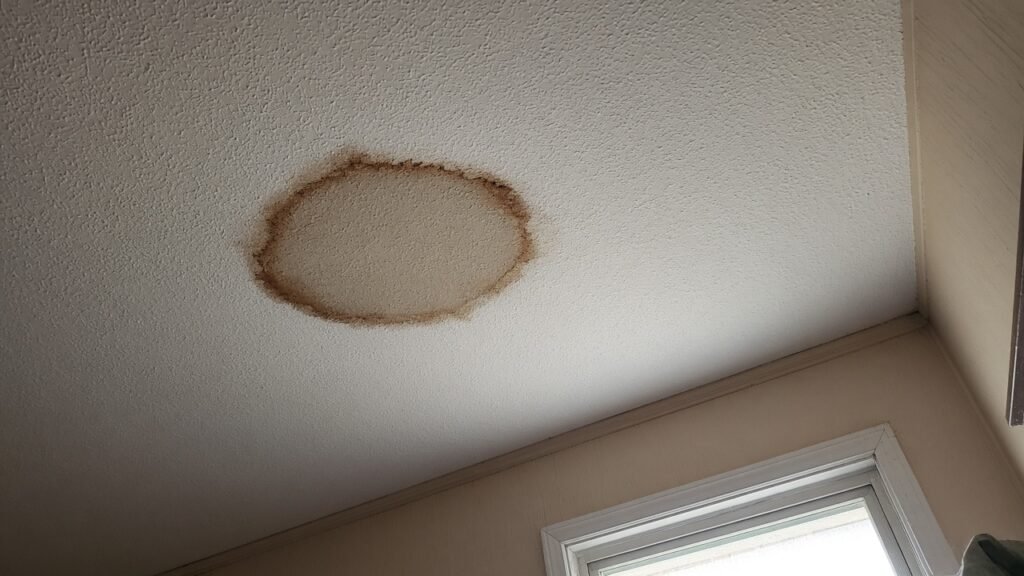
People ask: is this mold or a water stain? Short answer: you cannot tell from the color or a phone photo. A brown ring can be leftover mineral stain from water. It can also be mold growing on the wet material, or both on the same patch. If you need a species ID or a written record of that stain, swab it. Do not scrape, bleach, or paint it.
The U.S. Environmental Protection Agency (EPA) says the key to mold control is moisture control, and that wet materials dried within 24 to 48 hours after a leak usually do not grow mold. A leftover mark after that window is still a reason to document the surface, not a reason to guess it is “just water.”
By the Total Testing Editorial Team
Quick takeaways
- A water stain is discoloration left by moisture. Mold is living fungus. The same leak can leave both.
- Rings, yellow-brown color, and a dry surface do not prove the patch is inactive.
- The EPA’s 24 to 48 hour drying window is about preventing growth. It is not a lab result.
- The CDC says mold can look like spots of many colors, and that health effects vary by person. A test does not diagnose illness or make a room “safe.”
- Do not wipe, scrape, bleach, or paint the stain. Stop the water if you can without touching the growth. Then swab it if you need a lab ID.
What a water stain is, and what mold is
Water moving through drywall, paint, wood, or a ceiling tile can leave minerals, rust, or tannins behind. That leftover mark is a water stain. It is not a living colony by itself. It is evidence that the material got wet.
Mold is different. Spores are already in indoor air and house dust. The EPA notes it is impossible to get rid of all indoor mold spores, and that those spores will not grow if moisture is not present. When they land on a wet surface they can use as food — paper-faced drywall, wood, ceiling tile, dust, paint, carpet — they can form a colony.
That is why the two get mixed up. The leak made the stain. The same wet paper and wood can feed growth. A dry-looking ring can still have mold on the edge, on the back of the drywall, or in the dust sitting on the paint.
Dirt, mildew, and mold can look similar on those same surfaces. Color does not settle it. For how mildew differs from mold, see mold vs. mildew. For HVAC grilles, see mold or dirt around vents.
Where these marks show up in a house
Mold needs moisture and a surface it can use. In a house that usually means bathrooms, HVAC grilles, cabinet floors under sinks, windowsills, and — after a leak — ceilings, baseboards, and the edges of wet drywall. Basements and crawl spaces stay humid. Laundry walls sit next to washer hoses and dryer vents.
Those marks are moisture maps, not species IDs. The EPA lists leaking roofs, leaking or condensing pipes, and high humidity as common indoor moisture sources. If you see condensation on windows, walls, or pipes, the same EPA brief says to dry the wet surface and reduce the water source — without scraping a colony if growth is already there.
If the original leak was days ago and you still see a mark, that is the moment people search this question. Related: should I test after a water leak and do I need to test if I can already see it.
Clues that help, and clues that lie
Texture and smell are more useful than color. A powdery mineral film or a flat tan ring with a hard edge is often leftover stain. A fuzzy, velvety, or slimy patch, especially with a musty odor, is more likely growth. The CDC says mold can look like spots of many different colors and can smell musty.
Those clues still fail in ordinary rooms. Paint can look speckled. Drywall paper can brown without fuzz. Dust on a cold supply register can look black. A basement wall can show white powder that is salt, not mold. None of those photographs is a lab result.
Do not do a scratch test. Scraping a colony can put more spores in the room air than leaving it until a qualified remediator handles it. Total Testing does not instruct readers to wipe, soap, bleach, or peel paint to “see what is underneath.”
Health effects: the stain is not a diagnosis
People want the brown ring to mean “it is only water, we can sleep here.” A mineral stain is not mold. If mold is growing on that wet material, the CDC is clear that exposure to damp and moldy environments may cause a variety of health effects, or none at all.
For some people, mold can cause a stuffy nose, sore throat, coughing or wheezing, burning eyes, or a skin rash. People with asthma or a mold allergy may have more severe reactions. People with weakened immune systems or chronic lung disease can get infections. Effects vary by person. You cannot rely on a home sample to know who will get sick.
The CDC also does not recommend routine home mold testing as a way to predict illness. A Total Testing report names what was on the surface you sampled. It does not diagnose a condition, treat a disease, or score how “safe” the bedroom is. If someone in the home is ill, that is a conversation with a clinician, not a color on the ceiling.
Prevention: stop the water, do not scrub the mark
Prevention is moisture control. The EPA asks homeowners to keep indoor humidity below 60 percent, ideally between 30 and 50 percent; run bathroom and kitchen exhaust to the outside; fix roof, wall, and plumbing leaks; and dry wet materials within 24 to 48 hours when that can be done without disturbing growth.
What you can do without touching a colony: stop an active drip if you can reach the valve or the supply without scraping the stain; run a dehumidifier; keep the exhaust fan on after showers; dry standing water on a floor that does not have growth on it.
What you should not do: wipe, scrape, bleach, or soap the stain; paint over it; “kill it” with household cleaner. NIOSH notes that painting over water-damaged materials or moldy surfaces can cause further problems. After a lab report, a qualified mold remediation professional handles the colony. If the area is large or may be hidden behind the ceiling, also use a licensed mold assessor.
Why a Total Testing swab is the useful next step
Looking at a ring does not name it. A petri dish left open in the room grows ordinary indoor spores from the air. It does not tell you whether that ceiling patch is mineral stain, dirt, mildew, or mold. See are petri dish mold tests accurate.
A Total Testing surface swab is built for the stain you can see and reach. You roll a clean unused cotton swab across the patch with light, firm pressure, label the bag, and mail it with the package-specific chain of custody. An accredited laboratory analyzes the sample. A licensed mold inspector reviews that analysis. The digital report posts on total-testing-diy.com.
That report gives you a species ID of the stain, a dated written record for a landlord, a buyer, or the remediator you hire next, and inspector-reviewed lab work on the areas sampled — not a claim that an inspector walked the house.
The EPA says sampling is not required before professional cleanup, and that there are no EPA or other federal limits for mold, so a result cannot prove the house “complies” with a federal mold standard. The same EPA page says surface sampling may be useful after an area has been cleaned. Visible growth is still a reason to swab when you need a lab ID or a record. Related: are home mold test kits accurate.
Limits sit next to those uses. The sample is the surface you touched, not the cavity above the drywall and not an indoor air study. Full House (6 samples) is how someone checks whether stains in several rooms show growth. It is still a set of surfaces, not a walkthrough. Do not cut a hole in the ceiling to get a better swab.
How to choose what to swab
Swab the worst reachable stain: the darkest edge of the ceiling ring, the windowsill line, the cabinet floor, the baseboard that wicked water. Label the bag with the room and the exact spot. If two rooms were wet, sample both. Do not swab fresh paint that no longer shows the original mark.
Spot Check fits one stain plus a second nearby surface. Extended fits a bathroom plus nearby vents or a second wet room. Full House fits stains through the house.
Every package includes accredited laboratory analysis, a package-specific PDF chain of custody, prepaid FedEx shipping, and a report on total-testing-diy.com.
- Spot Check — $189 — 2 swabs — 48 business hours after lab receipt
- Extended — $215 — 4 swabs — 48 business hours after lab receipt
- Full House — $270 — 6 swabs — priority 24 business hours after lab receipt
Official product screening disclaimer
Total Testing DIY surface swab kits are a preliminary screening tool for accessible surfaces. They are not a comprehensive mold assessment, building inspection, indoor air quality study, medical test, clearance inspection, or mold removal service.
Do not disturb visible growth. For removal, use a qualified mold remediation professional under your state and local rules. If moisture may be hidden or the area is large, also use a licensed mold assessor.
Frequently asked questions
Is this mold or a water stain?
You cannot tell from color or a photo. A water stain is leftover discoloration from moisture. Mold is living fungus that grows on a wet surface. The same leak can leave both. If you need a species ID or a written record of that patch, swab it. Do not scrape, bleach, or paint it.
Does a round brown ring on the ceiling mean it is only water?
No. Mineral rings are common after a leak dries, but mold can colonize the same wet drywall, ceiling tile, or paint. Irregular edges, a fuzzy or slimy texture, or a musty smell make growth more likely. A lab swab of the stain is how you stop guessing.
How fast can mold grow after a leak?
The EPA says if wet or damp materials are dried within 24 to 48 hours after a leak or spill, in most cases mold will not grow. That is a moisture deadline, not a guarantee. If the material stayed wet longer, treat a remaining stain as something to document, not something to wipe.
Should I paint over a ceiling stain?
No. NIOSH notes that painting over water-damaged or moldy surfaces can cause further problems. Paint hides the patch and does not stop moisture. Stop the leak if you can without touching the growth, swab the stain if you need a lab record, and share the report with a qualified remediator.
Can a water stain make my family sick?
A mineral stain itself is not mold. If mold is growing on the wet material, the CDC says health effects vary by person: some people notice irritation or allergy-type symptoms in damp buildings, and others do not. A lab report does not diagnose illness or prove a room is safe.
Where do water stains and mold show up in a house?
Ceilings under a roof or upstairs bath, drywall under windows, cabinet floors under sinks, HVAC drip lines, and basement walls after seepage. Dirt, mildew, and mold can look similar on those same surfaces. See our guides on vents and mold vs. mildew.
Should I wipe the stain before I swab it?
No. Total Testing does not recommend wiping, scraping, or bleaching visible growth. Disturbing a colony can release spores. Stop active water if you can do that without touching the growth, then swab what you can reach.
Is a mail-in swab the same as a home inspection?
No. A Total Testing swab is inspector-reviewed lab analysis of the surface you sample. It does not mean an inspector walked the property, opened a wall cavity, or cleared the house. There are no EPA or federal mold limits, so a result cannot show the home passed a government standard.
How many samples do I need for one ceiling stain?
Spot Check is two samples ($189) and fits one stain plus a second nearby surface, such as a vent in the same room. Extended is four samples ($215). Full House is six samples ($270) if stains show up in several rooms. Label every bag with the exact spot.
Where do I get the lab report?
After the accredited laboratory receives the samples, the digital report posts to your account at total-testing-diy.com. Spot Check and Extended post within 48 business hours of lab receipt. Full House uses priority 24 business hour lab processing. Every analysis is reviewed by a licensed mold inspector.
Name the stain. Do not guess it is only water.
If a mark you can still reach is the open question, swab that mark. Keep the moisture off. Let a qualified remediator handle any colony the lab confirms.
Choose a package on total-testing.com. If you already ordered, the report posts at total-testing-diy.com.