
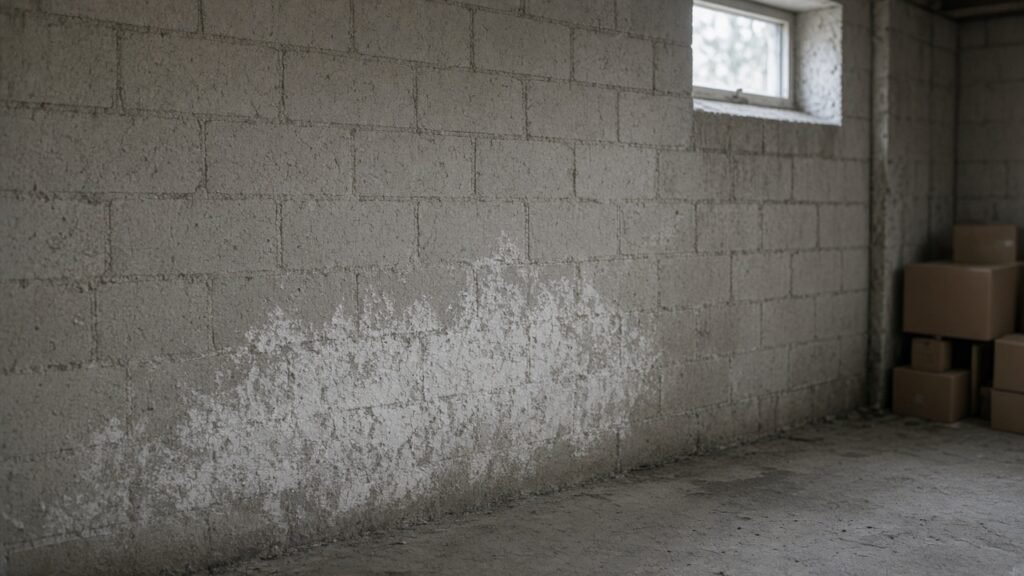
People ask: is the white stuff on the basement wall mold or salt? Short answer: it can be either, and you should not scrape it to find out. Efflorescence is mineral salt left when water evaporates through masonry. Mold is living fungus. If you need a species ID or a written record, swab the patch. Do not wipe, scrape, or bleach it.
Either finding means moisture moved through the basement. The EPA notes alkaline crystals on soil or concrete can look like mold. Salt is not a clean bill of health. Mold is not something to guess from a white film in a phone photo.
By the Total Testing Editorial Team
Quick takeaways
- White powder on brick or concrete is often efflorescence (mineral salt). Fuzzy, slimy, or musty growth is more likely mold.
- The EPA says alkaline crystals on concrete or crawl-space soil can mimic mold. That is a moisture clue, not a lab ID.
- Do not do a “does it dissolve in water” scratch test on a suspected colony. Disturbing growth can release spores.
- The CDC says health effects vary by person. A test does not diagnose illness or make a basement “safe.”
- A Total Testing swab names a reachable stain. Then a qualified remediator handles confirmed growth, and you still fix the water.
What efflorescence is, and what mold is
Masonry is porous. Groundwater, rain against the foundation, or a plumbing leak can carry dissolved minerals through concrete or brick. When that water reaches the indoor face and evaporates, the minerals stay behind as a white or gray crystalline film. That film is efflorescence. It is salt, not a fungus.
Mold is a living organism. Spores are already in indoor air. When they land on a damp surface they can use as food, they can grow. The EPA’s mold course is explicit that not everything that looks like mold is mold: alkaline crystals on soil or concrete walls may look like mold, but unlike mold they are usually water-soluble. In crawl spaces, a white, soluble fibrous material on the soil may be alkaline salts, not mold, and it still means moisture has been a problem.
Those two sentences are the whole homeowner puzzle. The white stuff might be salt. It might be mold on dust, paint, or cardboard sitting against the same damp wall. It might be both in the same corner. A photograph cannot finish the sentence.
Where this mix shows up in a house
Mold needs moisture and a carbon source. In a house that usually means bathrooms, HVAC grilles, under-sink cabinets, windowsills, and — below grade — basement walls, laundry rooms, and crawl spaces. The EPA lists basements among the rooms that are always or often damp, and says to check areas that have been wet. A leaking pipe in the basement is a reason to look at carpet, paneling, and drywall there for water damage or growth.
Concrete foundation walls show the salt pattern first: a dusty white bloom along the lower block, especially after a wet week. Paper-faced drywall that was finished against that wall can grow mold on the paper even while the masonry next to it shows only salt. Cardboard boxes, particle-board shelves, and bottom plates of wood studs are the food. Dust on a cold basement supply run can look dark or white depending on the light.
The EPA’s moisture advice still applies downstairs: keep indoor humidity below 60 percent, ideally 30 to 50 percent; slope grade away from the foundation; and dry wet materials within 24 to 48 hours when you can do that without disturbing growth.
Do not enter a crawl space you are not equipped to enter, and do not tear finishes to chase a better sample. Hidden moisture belongs with a licensed mold assessor. Related: after a water leak and musty smell with no visible mold.
Clues that help — and the test you should not run
Efflorescence is often dry, powdery, and crystalline. It sits on masonry. It may look thicker after a damp spell and thinner when the wall dries. Mold is more often irregular, fuzzy, velvety, or slimy. It may smell musty. The CDC says mold can look like spots of many different colors and can smell musty.
Home blogs will tell you to spritz the patch with water to see if the white stuff dissolves. The EPA’s point that salts are usually water-soluble is a laboratory distinction, not a DIY experiment on a wall that might be a colony. If the patch is mold, wetting and rubbing it can release spores. Total Testing does not instruct readers to wipe, scrape, bleach, or dissolve a suspected growth.
The honest field move is simpler: leave the patch, control new water if you can without touching it, and swab the worst reachable stain if you need a lab name or a written record.
Health effects: salt is not mold, and a report is not a medical clearance
Efflorescence is mineral residue. It is not a fungal colony. If the white film is mold, or if mold is growing on the drywall and boxes next to the salt, the CDC’s health language applies: exposure to damp and moldy environments may cause a variety of effects, or none at all.
Some people get a stuffy nose, sore throat, cough, wheeze, burning eyes, or a skin rash. People with asthma or a mold allergy may have more severe reactions. People who are immunocompromised or who have chronic lung disease may get infections. Effects vary by person. You cannot rely on a home sample to know who will get sick.
The CDC does not recommend routine home mold testing as a way to predict illness. A Total Testing report names what was on the surface you sampled. It does not diagnose a condition, treat a disease, or prove the basement is safe to finish, rent, or sleep in. If someone in the home is ill, that is a clinician’s question, not a color on the block wall.
Prevention: dry the basement, do not scrub the bloom
Prevention is moisture control. The EPA brief guide says the key to mold control is moisture control, and that if you clean up mold but do not fix the water problem, the mold is likely to come back. Keep humidity in the typical indoor range with a dehumidifier if the basement stays damp. Vent the dryer outside. Fix plumbing leaks. Keep gutters clear and the ground sloping away from the foundation so water does not sit against the wall.
What you can do without touching growth: run a dehumidifier; stop an active leak if you can reach the valve without scraping the patch; dry standing water on the floor if that floor does not have a colony on it; move cardboard and fabric off the damp wall so you are not adding food.
What you should not do: scrape the white film, bleach the block, paint over a suspected colony, or finish the basement over a wet wall. NIOSH notes that painting over water-damaged or moldy surfaces can cause further problems. After a report, a qualified mold remediation professional handles confirmed growth. If the area is large or may be hidden, also use a licensed mold assessor.
Why a Total Testing swab is the way out of the guess
Basement light is bad. Phone zoom is worse. Salt, dust, mildew, and mold share a white-gray palette on block. A petri dish left open on the workbench grows ordinary indoor spores from the air. It does not name the film on the wall. See are petri dish mold tests accurate.
Total Testing is the mail-in surface swab for the patch you can see and reach. You roll a clean unused cotton swab across the stain with light, firm pressure, label the bag, and ship it with the package-specific chain of custody and prepaid FedEx label. An accredited laboratory analyzes the sample. A licensed mold inspector reviews that analysis. The digital report posts on total-testing-diy.com.
That report gives you a species ID of the stain and a dated written record for a buyer, a landlord, or the remediator you hire next. It is inspector-reviewed lab work on the areas sampled — not a claim that an inspector walked the foundation.
The EPA says sampling is not required before professional cleanup, and that there are no federal limits for mold, so a result cannot prove the house complies with a government mold standard. Visible growth is still a reason to swab when you need an ID or a record. If the lab names mold, you have something specific to hand a remediator. If it does not, you still have a moisture problem to fix. Related: do I need to test if I can already see it and kit accuracy.
Limits sit next to those uses. The sample is the surface you touched, not the soil side of the wall and not an engineering inspection of the foundation. Full House (6 samples) is how someone checks a basement plus upstairs rooms. It is still a set of surfaces, not a walkthrough.
How to choose what to swab downstairs
Swab the worst reachable stain: the fuzzy patch on drywall or a box, the discolored paint line, or the grille in the same room. Label the bag with the exact wall, not only “basement.” If the laundry wall and a bedroom above both show marks, sample both.
Every package includes accredited laboratory analysis, a package-specific PDF chain of custody, prepaid FedEx shipping, and a report on total-testing-diy.com.
- Spot Check — $189 — 2 swabs — 48 business hours after lab receipt
- Extended — $215 — 4 swabs — 48 business hours after lab receipt
- Full House — $270 — 6 swabs — priority 24 business hours after lab receipt
Official product screening disclaimer
Total Testing DIY surface swab kits are a preliminary screening tool for accessible surfaces. They are not a comprehensive mold assessment, building inspection, indoor air quality study, medical test, clearance inspection, or mold removal service.
Do not disturb visible growth. For removal, use a qualified mold remediation professional under your state and local rules. If moisture may be hidden or the area is large, also use a licensed mold assessor.
Frequently asked questions
Is white stuff on the basement wall mold or salt?
It can be either. Efflorescence is mineral salt left when water evaporates through masonry. Mold is living fungus. The EPA notes alkaline crystals on soil or concrete can look like mold and are usually water-soluble. Do not scrape or wash a suspected colony to test that. If you need a lab ID, swab the patch.
How can I tell efflorescence from mold without touching it?
Efflorescence often looks like a dry, crystalline, white or gray powder on concrete or brick. Mold is more often fuzzy, slimy, or irregular, and it may smell musty. Color and a photo still fail. A surface swab is how you identify a reachable patch you cannot name by eye.
Does white powder on concrete mean the basement is dry?
No. Efflorescence means moisture moved through the masonry. Mold means moisture plus a surface the fungus can use as food. Either finding is a water problem. The EPA’s rule still applies: control moisture, and dry wet materials within 24 to 48 hours when you can do that without disturbing growth.
Can mold grow on concrete?
Mold needs a carbon source. Bare concrete is a poor food, but dust, paint, paper-faced drywall, stored cardboard, and wood against a damp wall can support growth. Fuzzy patches on those materials next to a white salt film are a common basement mix.
Should I scrape the white powder off?
No. Total Testing does not recommend scraping, wiping, or bleaching a suspected colony. If the powder is mold, disturbing it can release spores. Stop new water if you can without touching the growth, swab if you need an ID, and share the report with a qualified remediator.
Can basement mold make people sick?
The CDC says health effects from damp, moldy environments vary by person. Some people notice irritation or allergy-type symptoms; others do not. A lab report does not diagnose illness or prove the basement is safe. Efflorescence itself is mineral salt, not a fungus.
Should I enter a crawl space to swab it?
Only if you can reach a stain safely without tearing materials or entering a space you are not equipped to enter. The EPA notes a white, soluble fibrous material on crawl-space soil may be alkaline salts, not mold, and that it still means moisture has been a problem. Hidden or unsafe areas belong with a licensed assessor.
Is a mail-in swab a basement inspection?
No. A Total Testing swab is inspector-reviewed lab analysis of the surface you sample. It does not mean an inspector walked the basement, checked the foundation, or cleared the house. There are no EPA or federal mold limits, so a result cannot show the home passed a government standard.
How many samples do I need in a basement?
Spot Check is two samples ($189) and fits one wall patch plus a second nearby surface. Extended is four ($215). Full House is six ($270) if you also see stains upstairs. Label every bag with the exact spot.
Where do I get the lab report?
After the accredited laboratory receives the samples, the digital report posts to your account at total-testing-diy.com. Spot Check and Extended post within 48 business hours of lab receipt. Full House uses priority 24 business hour lab processing. Every analysis is reviewed by a licensed mold inspector.
Name the white film. Then fix the water.
If a basement stain you can reach is the open question, swab that stain. Keep the moisture off. Let a qualified remediator handle any colony the lab confirms.
Choose a package on total-testing.com. If you already ordered, the report posts at total-testing-diy.com.