
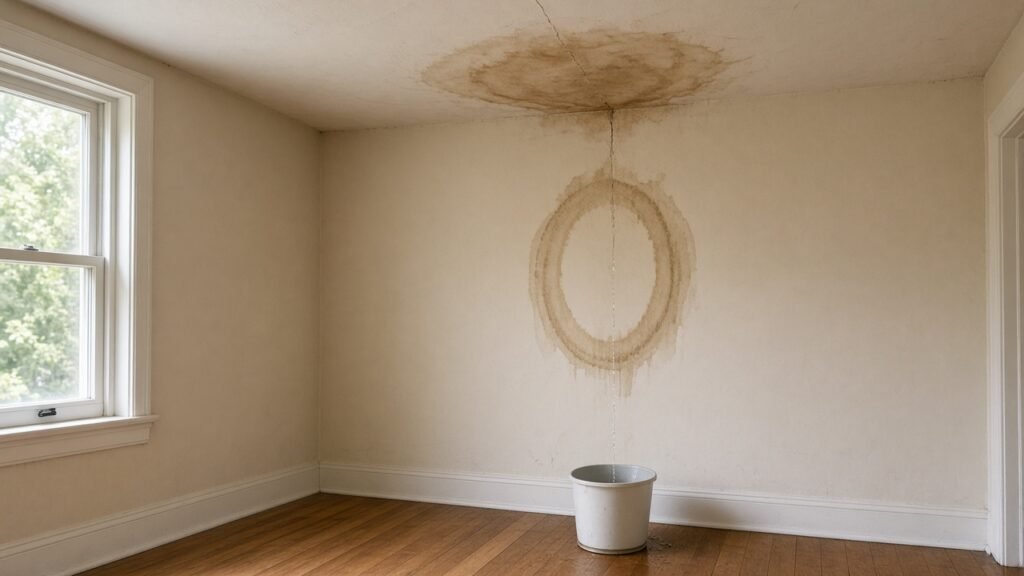
After a leak, dry first. The EPA says mold often does not grow if wet materials are dried within 24 to 48 hours. If a stain is still there — or you need a written lab ID of that stain for a landlord, a buyer, or before hiring remediation — swab the spot. Do not scrape, bleach, or wipe the growth yourself.
A surface swab names the patch you touched. It does not map moisture inside a wall, and it does not say who will get sick. The CDC does not use home tests to predict illness. Drying steps without touching growth: how to prevent mold after water damage.
By the Total Testing Editorial Team
Quick takeaways
- Stop the water. Dry standing water within 24–48 hours if you can do it without touching any colony.
- A remaining stain is a reason to test when you need a lab name or a written record.
- Swab the stain. Do not clean it first.
- Sewage or a large soaked area belongs with a qualified remediator, not a household swab alone.
When a swab helps after a leak
- You can still see a mark on drywall, baseboard, grout, or a cabinet floor.
- You need documentation of that surface before a repair crew starts.
- Two rooms got wet and the stains look different — sample each.
Skip random dry paint that only looks dirty. Sample the stain tied to the leak. If you cannot see a stain but the room smells musty, that is a different path: musty odor with no visible mold.
What not to do
Do not wipe, bleach, or scrape visible growth to “get ahead of it.” Disturbing a colony can release spores, and Total Testing cannot be responsible for DIY removal. Do not open walls yourself to hunt hidden mold. If the water was sewage, or a large area stayed wet, hire a qualified mold remediation professional.
How many samples
- Spot Check — $189 — 2 samples, 48 business hours after lab receipt. One leak’s two worst stains.
- Extended — $215 — 4 samples if the leak reached several rooms.
- Full House — $270 — 6 samples across multiple rooms, 24 business hour lab processing.
Use an unused cotton swab and a zip bag. No kit ships. How-to: collect a surface sample. Every package includes accredited lab analysis, a PDF chain of custody, prepaid FedEx, and an inspector-reviewed report on total-testing-diy.com.
Frequently asked questions
How soon after a leak should I worry about mold?
Dry within 24–48 hours when you can. That window is about moisture, not a swab. Swab later if a stain remains and you need a lab ID.
Should I still swab after I dried the leak?
Yes, if a stain remains and you need a species ID or a written record of that surface.
Should I clean the stain after a leak before I test?
No. Leave removal to a qualified remediator after the report if cleanup is required.