
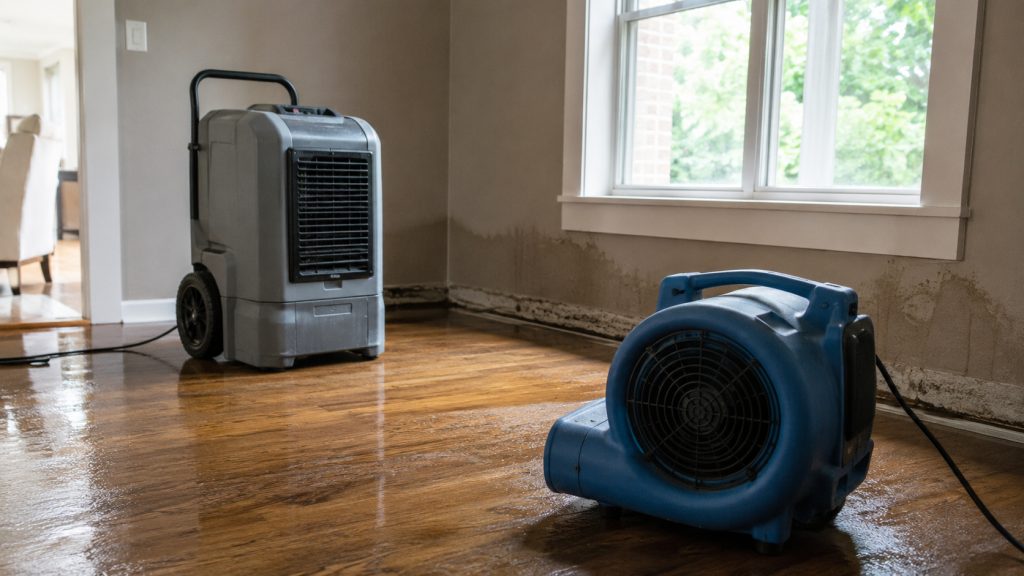
Quick Answer: To prevent mold after water damage, act within the first 24 to 48 hours. Stop the water source, remove standing water, and dry everything completely with fans and a dehumidifier. Throw out soaked porous materials, clean and disinfect surfaces, and keep humidity low. If a damp area still smells musty after drying, test it to confirm mold did not take hold.
Knowing how to prevent mold after water damage comes down to one thing: speed. Mold needs moisture to grow, and after a leak or flood your home gives it exactly that. The good news is that fast, focused action in the first two days stops most mold before it ever starts. Wait too long, and spores settle into drywall, carpet, and wood, where they are much harder to remove.
Here is the step-by-step plan to dry out your home, the timeline you are working against, and how to know if mold already started.
How Do You Prevent Mold After Water Damage?
You prevent mold after water damage by drying the affected area completely within 24 to 48 hours. Follow these steps in order.
- Stop the water source. Shut off the supply line, patch the leak, or wait for floodwater to recede before you start drying.
- Remove standing water. Use a wet vacuum, mop, or towels to clear as much water as possible right away.
- Move air and pull moisture. Run fans and a dehumidifier, and open windows if the outside air is dry. The goal is to dry everything fast.
- Remove soaked porous materials. Wet carpet padding, drywall, insulation, and cardboard often cannot be saved and should come out.
- Clean and disinfect. Wipe down hard surfaces with a cleaning solution to remove any spores that already landed.
- Watch the humidity. Keep indoor humidity below 60 percent while the area finishes drying.
How Long Before Mold Grows After Water Damage?
Mold can begin to grow within 24 to 48 hours after water damage. That short window is why speed matters so much. According to the U.S. Environmental Protection Agency, “if wet or damp materials or areas are dried 24 to 48 hours after a leak or spill happens, in most cases mold will not grow.” Beat that clock and you stop the problem before it starts.
What Should You Do in the First 48 Hours?
In the first 48 hours, focus everything on drying the space as fast and completely as possible. Get airflow moving across wet surfaces, run a dehumidifier around the clock, and check hidden spots like under flooring, behind baseboards, and inside wall cavities. Pay special attention to porous materials that hold water, since those are where mold takes hold first. The faster the area is bone dry, the lower your risk.
How Do You Know If Mold Already Started?
You know mold may have started if you notice a musty smell, see discoloration, or feel worsening allergy symptoms after the area dries. Because mold often grows out of sight inside walls and under floors, you cannot always confirm it by looking. When a spot still smells musty or sat wet for more than a couple of days, a lab test tells you for sure. With Total Testing, you can order an at-home mold test package and collect a sample yourself, then let an accredited lab identify the species and spore levels. Our how it works page shows the full process.
Stay Ahead of Mold After a Leak
Fast drying prevents most mold, and testing gives you certainty when you are not sure the danger has passed. Total Testing delivers accredited-lab results with the species, spore levels, toxicity, and a plain-language action plan, all from a sample you collect at home. Reach out to our team with any questions, and we will help you choose the right package for your home.