
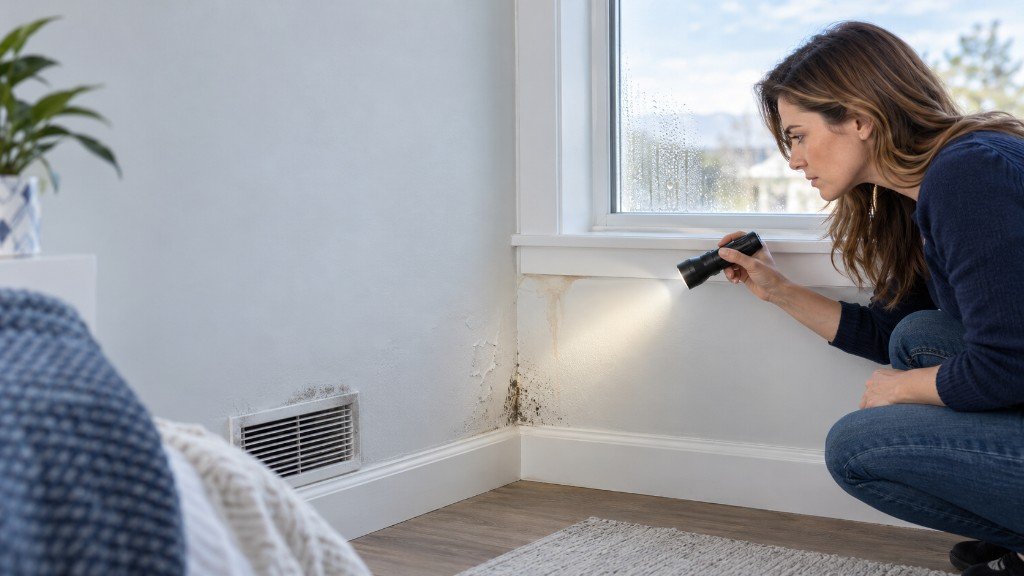
Homeownership comes with an endless checklist of maintenance items, but few things cause instant worry quite like suspecting mold growth. Whether you notice a subtle earthy smell in the basement or spot discolored patches under the bathroom sink, knowing what signs to look for helps you address moisture issues calmly before they expand.
Rather than guessing or paying for expensive, unneeded professional inspections right away, preliminary surface swab sampling provides clear, accredited laboratory data.
At Total Testing, our core message is grounded in a practical philosophy: Test Before You Guess. Below are 10 common signs that suggest mold may be present in your home, along with practical steps to evaluate your space.
By the Total Testing Editorial Team
Quick Executive Summary
Knowing the signs of indoor mold growth helps you act calmly and sample the right surfaces. Here is the practical takeaway:
Core Takeaways:
- Common indicators of mold include persistent musty odors, water stains, bubbling paint, high indoor humidity, and localized discoloration.
- Mold requires organic material and moisture to take root, making bathrooms, basements, kitchens, and laundry rooms primary watch areas.
- Open-air culture plates trap ambient outdoor spores and produce misleading false positives; direct surface swab sampling isolates target growth spots.
- Total Testing kits include sterile swabs, a package-specific PDF Chain of Custody (COC) form, prepaid FedEx express return shipping, and accredited laboratory microbiology analysis.
- Keep indoor relative humidity between 30% and 50% and clean up moisture spills within 24 to 48 hours per EPA and CDC recommendations.
Sign 1: A Persistent Musty or Damp Odor
One of the earliest and most reliable indicators of hidden mold is a persistent, damp odor often described as earthy, stale, or musty.
Why Odors Occur: As mold colonies consume organic building materials like drywall paper, wood framing, or carpet backing, they release microbial volatile organic compounds (mVOCs). These gases produce a distinct smell even when mold colonies remain tucked away behind cabinets or furniture.
What to Do: If a room consistently smells damp despite thorough cleaning and ventilation, inspect nearby surfaces for hidden moisture or subtle discoloration.
Sign 2: Visible Discoloration, Staining, or Fuzzy Patches
Visible growth is the most obvious sign, but mold does not always present as dark black spots.
Appearance Variations:
- Colors can range from deep black and dark green to velvet white, yellow, gray, or brown.
- Textures may appear dry and powdery, fuzzy and raised, or slick and slimy depending on moisture availability.
The Testing Advantage: Not every dark spot on a wall is active mold; soot, dirt, and mineral deposits frequently mimic fungal growth. Swabbing a 2×2 inch patch allows an accredited laboratory to examine the surface microscopically to verify fungal structures.
Sign 3: Unexplained Water Stains or Drywall Discoloration
Yellowish-brown rings on ceilings or dark streaks along drywall surfaces indicate past or ongoing water intrusion.
Why Water Stains Matter: According to moisture guidelines from the U.S. Environmental Protection Agency (EPA), water stains are physical proof that building materials have absorbed moisture. If porous materials remain wet for longer than 24 to 48 hours, mold spores naturally present in indoor air can settle and begin growing.
Key Checkpoints: Inspect areas directly beneath upper-floor bathrooms, roof valleys, window sills, and exterior wall corners.
Sign 4: History of Plumbing Leaks, Sink Drips, or Appliance Spills
If your home has experienced a pipe drip under the kitchen sink, a slow dishwasher leak, or a washing machine overflow, mold may have established a foothold.
Hidden Moisture Traps: Water frequently trickles beneath cabinetry kickplates, subflooring, or baseboards where airflow is minimal. Even after visible puddles are wiped away, trapped dampness behind wood panels creates ideal conditions for mold.
Preventive Steps: Whenever a leak occurs, ensure structural materials are dried completely within 24 to 48 hours. If discolored patches appear after a spill, surface swab testing helps confirm whether mold has developed.
Sign 5: High Indoor Humidity and Window Condensation
Indoor climate conditions play a central role in fungal growth. If your home consistently feels humid or sticky, mold risks increase.
Understanding Humidity Benchmarks:
- The EPA and CDC recommend maintaining indoor relative humidity between 30% and 50%.
- When indoor humidity exceeds 60%, condensation forms on cold glass windowpanes, metal frames, and exterior-facing walls.
What Condensation Indicates: Frequent droplet accumulation on windows indicates that indoor air holds excessive water vapor, creating elevated risk for surface mold on adjacent trim and drywall.
Sign 6: Peeling, Bubbling, or Cracking Paint and Wallpaper
When moisture accumulates behind painted surfaces or wallpaper, the adhesive bond breaks down.
Visual Clues:
- Paint that bubbles, blisters, or flakes away from baseboards and trim.
- Wallpaper seams that lift, curl, or display dark outlines along edges.
Why This Happens: Moisture migrating through drywall pushes paint film outward. Swabbing the discolored drywall surface beneath peeling paint provides direct samples for lab analysis.
Sign 7: Dark Staining in Tile Grout and Caulking Seams
Bathrooms, shower stalls, and tile backsplashes are high-moisture environments where fungal spores frequently settle.
Evaluating Tile Surfaces:
- Dark discoloration along silicone caulking edges or porous grout lines.
- Persistent staining that returns even after the area has been used or disturbed.
Do not scrape grout or caulk to “test” it. Disturbing growth can release spores. Swab a 2×2 inch patch for a lab ID, then hire a qualified mold remediation professional. Deteriorating caulk or cracked grout often has to be replaced as part of professional work after moisture is controlled.
Sign 8: Damp, Soft, or Warped Flooring and Baseboards
Flooring materials absorb moisture from subfloor leaks or concrete slab dampness, leading to physical distortion.
Signs of Subfloor Dampness:
- Hardwood planks that cup (edges curve upward) or crown (centers bulge).
- Vinyl tile or laminate planks that lift at seams or feel spongy underfoot.
- Baseboards that pull away from drywall or show dark staining along the floor line.
Testing Approach: Collect a surface swab from the discolored floor joint or lower baseboard edge to identify fungal species present before undertaking floor repairs.
Sign 9: Dust-Like Growth Around Air Vents or HVAC Grilles
Heating, ventilation, and air conditioning (HVAC) systems circulate air throughout your home. When high humidity meets cool supply vents, condensation forms on metal grilles.
What to Watch For:
- Dark, dust-like accumulation clinging to supply vent louvers.
- Fuzzy spots along ceiling drywall surrounding air registers.
Why Surface Swabbing Helps: Swabbing vent grilles or surrounding ceiling patches confirms whether accumulated dust contains active surface mold growth or everyday household dust particles.
Sign 10: Allergic-Type Responses That Seem Worse Indoors
While Total Testing kits are surface screening tools rather than medical diagnostic instruments, indoor environmental factors can influence how a space feels.
Sensory & Comfort Observations:
- Experiencing mild nasal congestion, sneezing, or eye irritation that feels more noticeable when spending time in specific rooms.
- Noticing that symptoms ease when stepping outside into fresh air or leaving the property.
As noted by the Centers for Disease Control and Prevention (CDC) and World Health Organization (WHO), indoor dampness and mold can contribute to reduced indoor air quality. Verifying surface conditions provides factual data to guide home maintenance decisions.
Direct Surface Swab Sampling vs. Open-Air Culture Plates
When evaluating your home for mold, choosing the right testing method is essential for obtaining accurate facts.
| Feature | Open-Air Culture Plates | Over-the-Counter Mail Kits | Total Testing DIY Surface Swabs |
|---|---|---|---|
| Sampling Method | Open agar dish left in room air | Variable surface or air collection | Targeted sterile surface swab (2×2 inch patch) |
| Lab Fees Included | No (requires extra mail-in fees) | Often extra mail-in fee ($40 to $60 per sample) | Yes, accredited laboratory microbiology included |
| Shipping Included | No prepaid shipping | Standard slow mail (no express tracking) | Prepaid FedEx express return shipping included |
| Documentation | Manual paper slips | Varies by brand | Package-specific PDF Chain of Custody (COC) form |
| Turnaround Time | 7 to 10 days waiting for growth | 1 to 2 weeks after mail arrival | 24 to 48 business hours after lab receipt |
| Scientific Clarity | Low (captures natural ambient spores) | Medium (depends on sample quality) | High (direct microscopic identification of surface mold) |
Note: The table above outlines general industry comparisons. Total Testing packages cover all laboratory microbiology analysis, prepaid express shipping, and digital reports with no hidden fees.
Total Testing Package & Pricing Options
Total Testing provides clear, flat-rate packages tailored to different home sizes and testing needs:
- Spot Check ($189): Includes 2 surface swab samples, package-specific PDF Chain of Custody (COC) form, prepaid FedEx express return shipping, accredited laboratory microbiology analysis, and 48 business hour lab turnaround after receipt.
- Extended ($215): Includes 4 surface swab samples for multi-room coverage, PDF COC form, prepaid FedEx shipping, accredited lab analysis, and 48 business hour lab turnaround after receipt.
- Full House ($270): Includes 6 surface swab samples for comprehensive home coverage, PDF COC form, prepaid FedEx express shipping, accredited lab analysis, and priority 24 business hour lab turnaround after receipt.
Practical Moisture Control & Prevention Blueprint
Identifying mold is only half the equation; managing moisture prevents future growth.
EPA & CDC Guidelines for Homeowners:
- Control Indoor Humidity: Keep relative humidity between 30% and 50% using air conditioners, dehumidifiers, and exhaust fans in kitchens and bathrooms.
- Dry Leaks Promptly: Clean and dry any standing water, pipe leaks, or window condensation within 24 to 48 hours.
- Do Not Clean Visible Growth Yourself: Scrubbing, bleaching, or scraping mold can release spores into the air. Share your lab report with a qualified mold remediation professional. Total Testing does not instruct homeowners to remove mold.
- Improve Air Circulation: Move furniture slightly away from exterior walls to allow air movement behind large pieces.
Official Product Screening Disclaimer
Total Testing DIY mold test kits provide preliminary surface screening through accredited laboratory microbiology analysis. DIY surface swab sampling is designed to identify mold species on accessible surfaces and is not a substitute for a comprehensive professional engineering evaluation, structural building inspection, or indoor air quality study.
Frequently Asked Questions
How do I know if a dark spot is mold or just dirt?
Dirt and soot often look dry and powdery on a dry surface. Fungal growth embeds into organic materials and often looks textured, fuzzy, or slimy. Do not wipe a stain to “test” it if it might be mold. Swabbing a 2×2 inch patch and submitting it with your package-specific PDF Chain of Custody form allows certified microbiologists to examine the sample under microscopic evaluation.
Do I need to test every room in my house?
No. Targeted testing focuses on specific areas of concern, such as discolored drywall, damp basement corners, or cabinet interiors. For single spots, the Spot Check package (2 samples) is ideal, while multi-room concerns benefit from the Extended (4 samples) or Full House (6 samples) packages.
How does the package-specific PDF Chain of Custody form work?
When your Total Testing kit arrives, you will receive a package-specific PDF Chain of Custody (COC) form. Fill out the sample location details (such as “Kitchen Sink Cabinet” or “Basement West Wall”) on the paper form and place it inside your return box alongside your labeled swab tubes before sealing the prepaid FedEx shipping mailer.
What is the turnaround time for lab results?
Once your box arrives at the accredited laboratory via prepaid FedEx express shipping, standard analysis takes 48 business hours for Spot Check and Extended packages. The Full House package includes priority 24 business hour laboratory turnaround after receipt.
Take Control of Your Home’s Air Quality
Don’t let unexplained dampness or discolored spots cause ongoing worry. By following a calm, step-by-step approach, you can get clear, lab-verified facts without overpaying for unnecessary inspections.
Remember: Test Before You Guess.
Visit total-testing.com today to select the right DIY mold testing package for your home, or log into total-testing-diy.com to access your digital lab reports once testing is complete.