
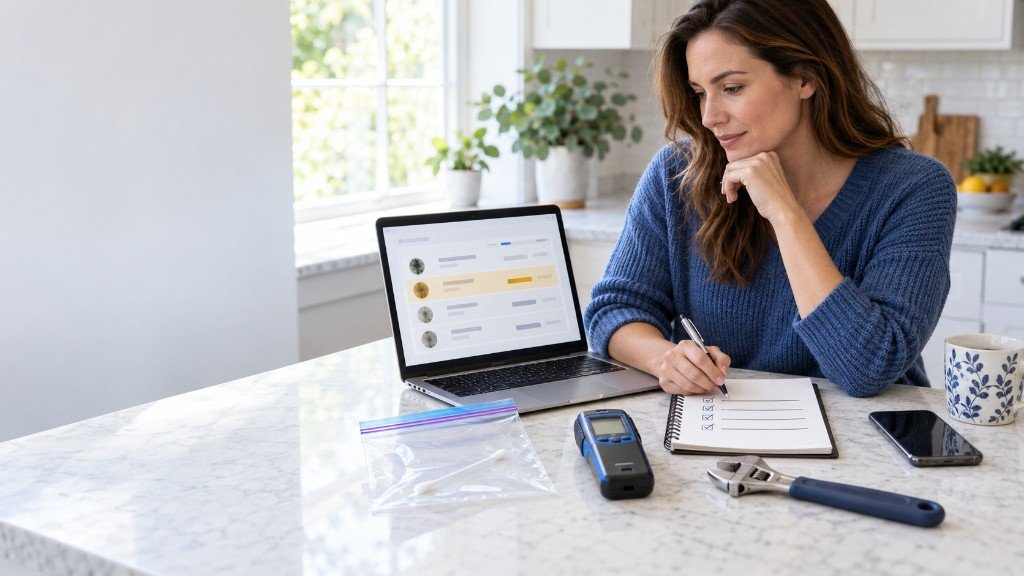
Opening your laboratory results to find a positive mold identification can cause a moment of anxiety. Whether you noticed a discolored patch in the laundry room or a damp odor under the kitchen sink, seeing scientific confirmation of mold growth on a surface often leaves homeowners asking: What do I do next?
First, take a deep breath. A positive result is not a reason to panic. It is simply clear, actionable data that replaces uncertainty with facts.
At Total Testing, our work is built on one core guiding principle: Test Before You Guess. Now that you have lab-verified facts, you can take logical, effective steps to protect your home and restore indoor air quality.
Here is a practical, step-by-step blueprint based on official guidance from the U.S. Environmental Protection Agency (EPA) and the Centers for Disease Control and Prevention (CDC).
By the Total Testing Editorial Team
Quick Executive Summary
Receiving a positive mold lab report means you have moved from guesswork to clear scientific facts. Here is the immediate action plan:
Core Takeaways:
- Do Not Panic: Mold spores exist everywhere in nature. A positive surface sample simply identifies growth on a specific sampled patch.
- Fix the Moisture Source First: Mold cannot grow without water. Locate and repair plumbing leaks, condensation, or high humidity immediately.
- Do not disturb the growth: Do not scrape, bleach, or wipe visible mold yourself. Disturbing growth can release spores into the air. Share your lab report with a qualified mold remediation professional.
- Control Indoor Humidity: Keep relative humidity levels between 30% and 50% using air conditioning, dehumidifiers, and exhaust fans.
- Know When to Call a Pro: For extensive structural water damage, large porous surface contamination, or hidden wall cavity leaks, professional remediation may be warranted.
Step 1: Read and Understand Your Accredited Laboratory Report
When your surface swab samples are processed by our accredited environmental microbiology laboratory, your report is uploaded directly to your secure portal at total-testing-diy.com within 24 to 48 business hours after lab receipt.
Instead of vague assumptions, your lab report provides specific microscopic data about the surface swabbed.
Key details to check in your report:
- Identified Mold Species: The report lists the specific mold types found on the sampled surface.
- Concentration Levels: Microscopic evaluation clarifies whether the swab picked up light background spores or active localized surface growth.
- Sample Location Cross-Reference: Your report matches the sample numbers recorded on the package-specific PDF Chain of Custody (COC) form included with your original order.
Understanding these details allows you to target your response precisely where it is needed without overspending on unneeded home repairs.
Step 2: Stop the Water Source Immediately (The EPA Golden Rule)
The single most important rule of mold management is simple: Fix the moisture problem.
According to the U.S. Environmental Protection Agency (EPA) and the CDC, mold spores cannot germinate or grow without moisture. If you clean visible mold but leave an active water leak unaddressed, the mold will inevitably return.
Action Steps for Moisture Control:
- Inspect Plumbing and Fixtures: Check under sinks, behind toilets, and around appliance water lines for slow drips or condensation.
- Clean and Dry Leaks Quickly: Dry wet building materials and contents within 24 to 48 hours of a spill or leak to prevent mold growth from establishing.
- Manage Indoor Humidity: Maintain relative indoor humidity between 30% and 50%. Use dehumidifiers in basements and ensure exhaust fans vent outdoors in bathrooms and kitchens.
Step 3: Do Not Clean the Growth Yourself
A positive surface result tells you what was on that 2×2 inch patch. It is not a license to scrub the stain. Total Testing does not perform cleanup and does not instruct homeowners to remove mold.
Scrubbing, bleaching, or scraping visible growth can release spores into room air and create more exposure. Keep people and pets away from the area as much as practical. Do not paint over it.
Share the digital report with a qualified mold remediation professional. If moisture may be hidden, the area is large, or porous materials (drywall, carpet padding, insulation) are involved, also use a licensed mold assessor under your state and local rules.
Step 4: Stop Moisture Without Disturbing the Colony
Stopping a leak or lowering humidity is moisture control. It is not the same as disturbing established growth.
- Shut a valve, run a dehumidifier, or dry standing water if you can do so without touching the mold.
- Leave removal, containment, and material replacement to a qualified remediator.
Step 5: Prevent Recurrence with Long-Term Moisture Blueprint
After a professional has removed the growth, maintaining proper indoor conditions helps keep mold from returning.
Long-Term Prevention Checklist:
- Monitor Humidity Daily: Use an inexpensive digital hygrometer to ensure indoor air stays between 30% and 50% relative humidity.
- Increase Air Circulation: Keep interior doors open and use ceiling fans to prevent stagnant air pockets in closets and corners.
- Inspect Roofs and Gutters: Ensure rainwater drains properly away from your foundation wall.
- Keep HVAC Units Clean: Regularly replace air filters and inspect air conditioner condensation lines to ensure proper drainage.
Total Testing DIY Package & Process Overview
If you suspect additional problem areas in your home or need to evaluate multiple rooms, Total Testing provides clear, flat-rate surface sampling packages:
Package Options
- Spot Check ($189): Includes 2 surface swab samples, package-specific PDF Chain of Custody (COC) form, prepaid FedEx express return shipping label, accredited laboratory microbiology analysis, and 48 business hour lab turnaround after receipt.
- Extended ($215): Includes 4 surface swab samples for multi-room evaluation, package-specific PDF COC form, prepaid FedEx express shipping, accredited lab analysis, and 48 business hour lab turnaround after receipt.
- Full House ($270): Includes 6 surface swab samples for comprehensive home coverage, package-specific PDF COC form, prepaid FedEx express shipping, accredited lab analysis, and priority 24 business hour lab turnaround after receipt.
How the Process Works
- Select your package at total-testing.com.
- Receive your package materials including sterile swabs, prepaid FedEx shipping label, and package-specific PDF COC form.
- Swab a 2×2 inch patch on your target surface and complete your PDF COC form.
- Drop your package at any official FedEx location.
- Access your digital lab report at total-testing-diy.com in 24 to 48 business hours after lab receipt.
Official Product Screening Disclaimer
Total Testing DIY mold test packages provide preliminary surface screening through accredited laboratory microbiology analysis. DIY surface swab sampling is designed to identify mold species on accessible surfaces and is not a substitute for a comprehensive professional engineering evaluation, structural building inspection, or indoor air quality study.
Frequently Asked Questions After a Positive Mold Test
Does a positive mold test mean my home is unsafe?
Not necessarily. Mold spores exist naturally everywhere. A positive surface swab identifies localized growth on a specific sampled area. Finding a small spot under a sink signals a moisture issue to stop and a patch to document — then hire a qualified mold remediation professional. Do not scrape or wipe it yourself.
Should I re-test after professional removal?
A follow-up surface swab can document that the same accessible patch no longer shows the same growth after a qualified remediator has finished. It is not required, and it is not a whole-house clearance. Do not disturb remaining growth yourself to “check.”
Can I just paint over mold on a wall?
No. Painting over active mold will cause the paint to peel and the growth to continue underneath. Do not scrape, bleach, or wipe it yourself. Share your lab report with a qualified mold remediation professional, and stop active leaks if you can do so without touching the colony.
How fast will I get lab results for follow-up samples?
Total Testing delivers digital lab reports in 24 to 48 business hours after our accredited laboratory receives your samples (with priority 24 business hour turnaround available on Full House packages).
Move Forward with Confidence and Clarity
A positive mold test result is a laboratory record of that surface — the information you can share with a landlord or a qualified remediator. Control moisture. Do not disturb the growth yourself.
Remember: Test Before You Guess.
To order a testing package for your home, visit total-testing.com. If you already have your report and want to review your laboratory details, log into your portal at total-testing-diy.com.