
Quick Answer: Mold hides in your house wherever moisture collects and air does not move, especially bathrooms, under sinks, basements, around windows, in HVAC systems, behind walls, and in attics. A musty smell or worsening allergies often points to mold you cannot see. When you suspect hidden mold, a lab test of a sample you collect yourself confirms what is really there.
If you are wondering where mold hides in your house, start with the spots that stay damp and out of sight. Mold needs three things to grow: moisture, warmth, and a surface to feed on. That combination shows up in more places than most people expect, and a lot of them are hidden from everyday view. Catching mold early keeps a small problem from turning into a big, expensive one.
Here are the seven places to check first, the early warning signs to watch for, and how to confirm mold you cannot see.
Where Does Mold Hide in Your House?
Mold hides in your house in the damp, poorly ventilated areas where water lingers. Work through these seven spots in order, since they are the most common places mold takes hold.
1. Bathrooms
Bathrooms are the number one place mold hides, thanks to constant humidity. Check the shower and tub, the tile grout, the caulk, behind the toilet, and around the exhaust fan.
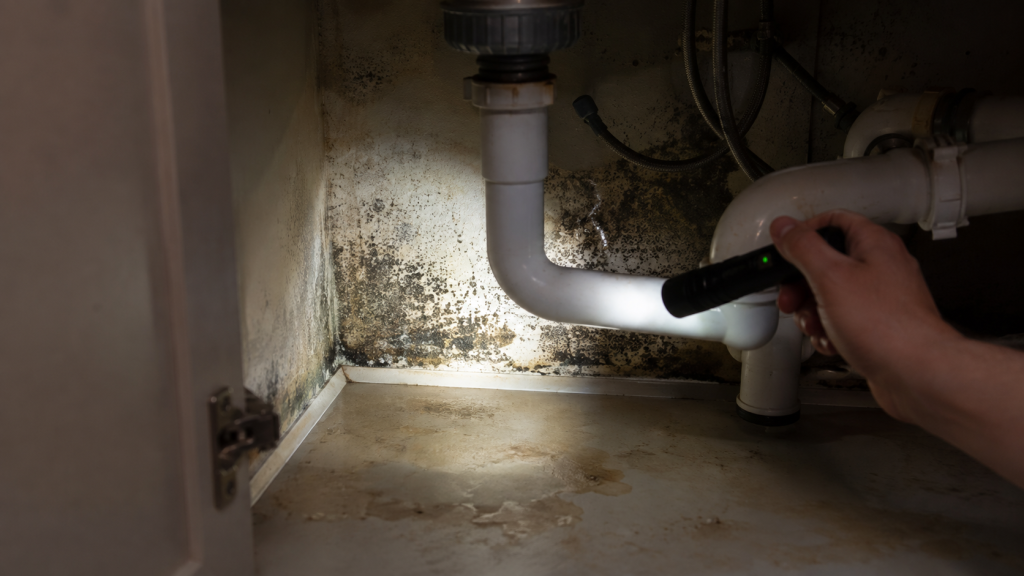
2. Under Kitchen and Bathroom Sinks
The cabinet under a sink traps moisture from slow drips and condensation on the pipes. Look at the back wall, the cabinet floor, and the plumbing connections.
3. Basements and Crawl Spaces
Basements stay cool and damp, which makes them a magnet for mold. Inspect the walls, the floor, the area around any sump pump, and stored cardboard boxes that soak up moisture.
4. Around Windows
Condensation collects on window glass and frames, especially in cooler months. Check the sills, the frame corners, and the caulk for dark spotting.
5. HVAC Systems and Air Vents
Air conditioners and ductwork create condensation, and mold can grow inside them and spread spores through your home. Look at the vents, the drip pans, and around the air handler.
6. Behind Walls and Under Flooring
A slow leak inside a wall or under a floor can feed mold for months before you notice. Warping, discoloration, or a musty smell near a past leak are your clues.
7. Attics
Roof leaks and poor ventilation make attics a common hiding spot. Check the underside of the roof decking, around vents, and near any water stains.
What Are the Signs of Hidden Mold?
The clearest sign of hidden mold is a musty, earthy smell that you cannot trace to anything visible. Other clues include allergy symptoms that get worse indoors, water stains, peeling or bubbling paint, warped walls or floors, and any history of leaks or flooding. If you notice these signs but cannot find the source, the mold is likely growing somewhere out of sight.
Controlling moisture is the best way to keep mold from spreading. According to the U.S. Environmental Protection Agency, “the key to mold control is moisture control,” and keeping indoor humidity below 60 percent makes your home far less friendly to mold.
How Do You Find Mold You Cannot See?
You find hidden mold by testing a sample from the suspected area, since you cannot confirm it by sight alone. When a spot smells musty or sits near an old leak, a lab test tells you whether mold is present and exactly what type it is. With Total Testing, you can order an at-home mold test package and collect the sample yourself using everyday items, with no inspector needed. Our how it works page walks through every step from sample to report.
Catch Mold Early, Before It Spreads
The sooner you find mold, the easier it is to handle. Total Testing gives you accredited-lab results with the species, spore levels, toxicity, and a clear action plan, so you can act fast and with confidence. Reach out to our team with any questions, and we will help you choose the right package for your home.