
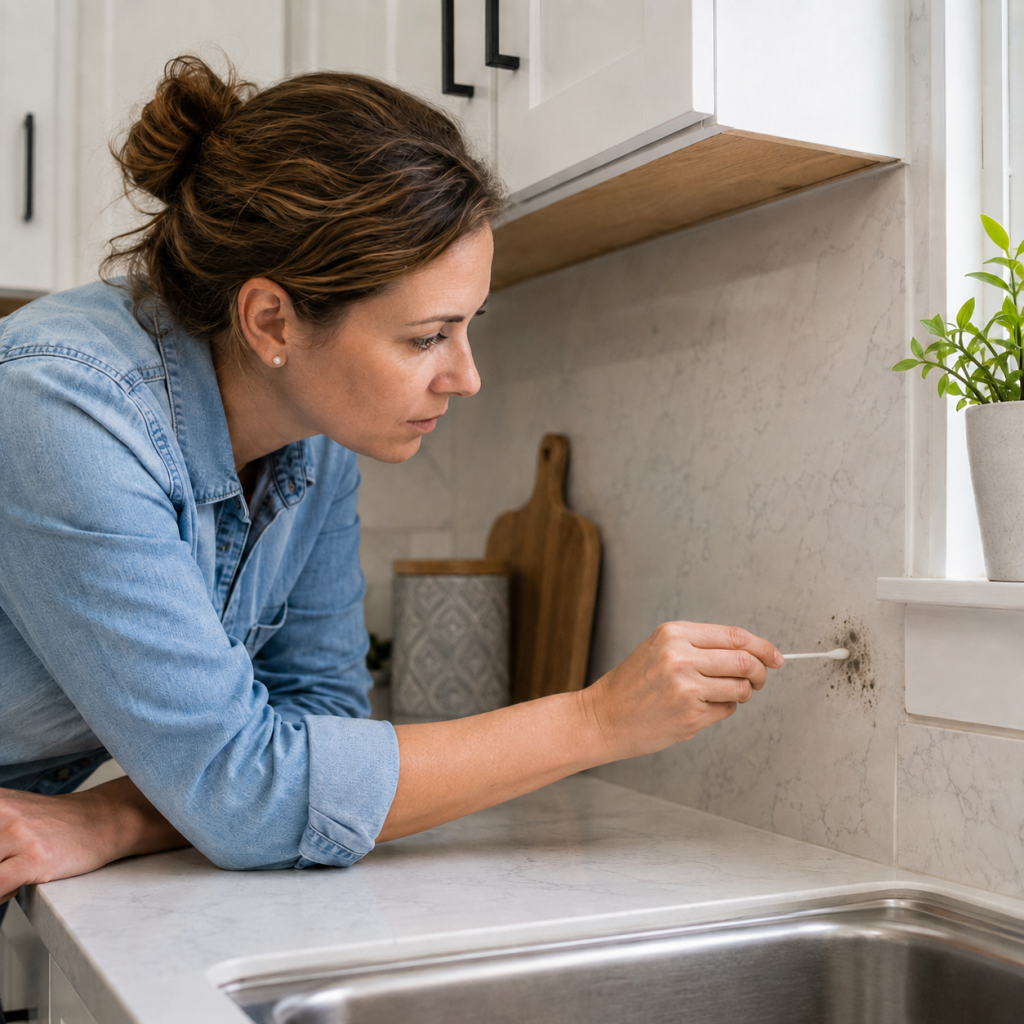
Quick Answer: To test for mold in your house, start by checking damp, musty areas for visible growth, then collect a sample to confirm the exact type. Store-bought petri-dish kits only prove that mold exists, which it always will in some amount. For real answers, collect a swab sample at home and send it to an accredited lab that identifies the species, toxicity, and spore levels.
Learning how to test for mold in your house is easier than most people think, and you do not need to hire an inspector to get accurate answers. Mold hides in damp, warm spots like bathrooms, basements, under sinks, and around windows, and it often grows behind walls where you cannot see it. The goal of testing is not just to prove mold exists. It is to find out what kind of mold you have and how serious it is, so you know exactly what to do next.
This guide walks through how to check your home yourself, why the cheap store kits fall short, and how to get lab-grade results from a sample you collect at home.
How Do You Test for Mold in Your House Yourself?
You test for mold in your house yourself by inspecting the damp areas, then collecting a sample to send to a lab. Here is the simple step-by-step process.
- Look for visible mold and moisture. Check bathrooms, basements, laundry rooms, under sinks, and around windows for discoloration, dark spots, or fuzzy patches.
- Follow your nose. A musty, earthy smell often points to hidden mold, even when you cannot see it yet.
- Note past water problems. Any spot that has had a leak, flood, or long-term dampness is a prime place to test.
- Collect a sample. Swab the surface you want tested with a simple cotton swab, seal it in a ziplock bag, and label it with the location.
- Send it to an accredited lab. The lab identifies the exact species, the toxicity, and the spore levels, then gives you a report.
With Total Testing, you can skip the inspector and the wait for a mailed kit. You order an at-home mold test package, collect the sample the same day using items you already own, then drop it at a FedEx location with the prepaid shipping label. You can see every step on our how it works page.
Do At-Home Mold Test Kits Actually Work?
Most store-bought mold test kits do not give you useful answers, because they only show that mold spores are present. Mold spores float in the air of every home, so a petri dish left on a counter will almost always grow something. That result does not tell you the species, whether it is toxic, or how bad the problem is. It can even cause needless worry over a harmless amount of everyday mold.
A lab-based test is different. A laboratory examines your actual sample under a microscope and identifies what is really there. That is the difference between “something grew in a dish” and “you have this specific mold at this level, and here is your action plan.”
How Do I Know If I Have Mold in My House?
You may have mold in your house if you notice a musty smell, see dark or fuzzy spots, or deal with allergy symptoms that get worse indoors. Common warning signs include sneezing, a runny nose, itchy eyes, or a scratchy throat that eases when you leave the house. Water stains, peeling paint, warped walls, and past leaks are also strong clues. Because mold often grows out of sight, these signs are worth taking seriously even when nothing looks obviously moldy.
Controlling moisture is the best way to stop mold before it starts. According to the U.S. Environmental Protection Agency, “the key to mold control is moisture control,” and keeping indoor humidity below 60 percent makes it much harder for mold to grow.
When Should You Test for Mold in Your House?
You should test for mold in your house when you suspect a hidden problem or want to know exactly what you are dealing with. Good times to test include after a leak or flood, when a musty smell will not go away, when someone in the home has ongoing allergy or breathing issues, or before you buy or sell a home. Testing also gives you documentation if you need it for a landlord, an insurance claim, or your own peace of mind.
Testing turns a guess into a fact. Instead of wondering whether that spot behind the bathroom tile is dangerous, you get a clear report that tells you the species, the severity, and the next steps.
The Easier Way to Test for Mold at Home
Total Testing gives you accredited-lab results without an inspector and without waiting for a kit to arrive. You collect the sample yourself with everyday items, label and photograph it, and send it to the lab with the prepaid shipping label. Results come back in as little as 24 business hours after the lab receives your samples, and every report includes the mold species, toxicity, spore levels, and a plain-language action plan.
That means you get the accuracy of a professional lab with the convenience of doing it on your own schedule, from home.
Ready to Find Out What Is in Your Home?
If you have spotted mold or noticed a musty smell, testing is the fastest path to a real answer. Total Testing makes it simple to test from home and get accredited-lab results you can trust. Reach out to our team with any questions, and we will help you choose the right package for your home.